

Каталог▲▼
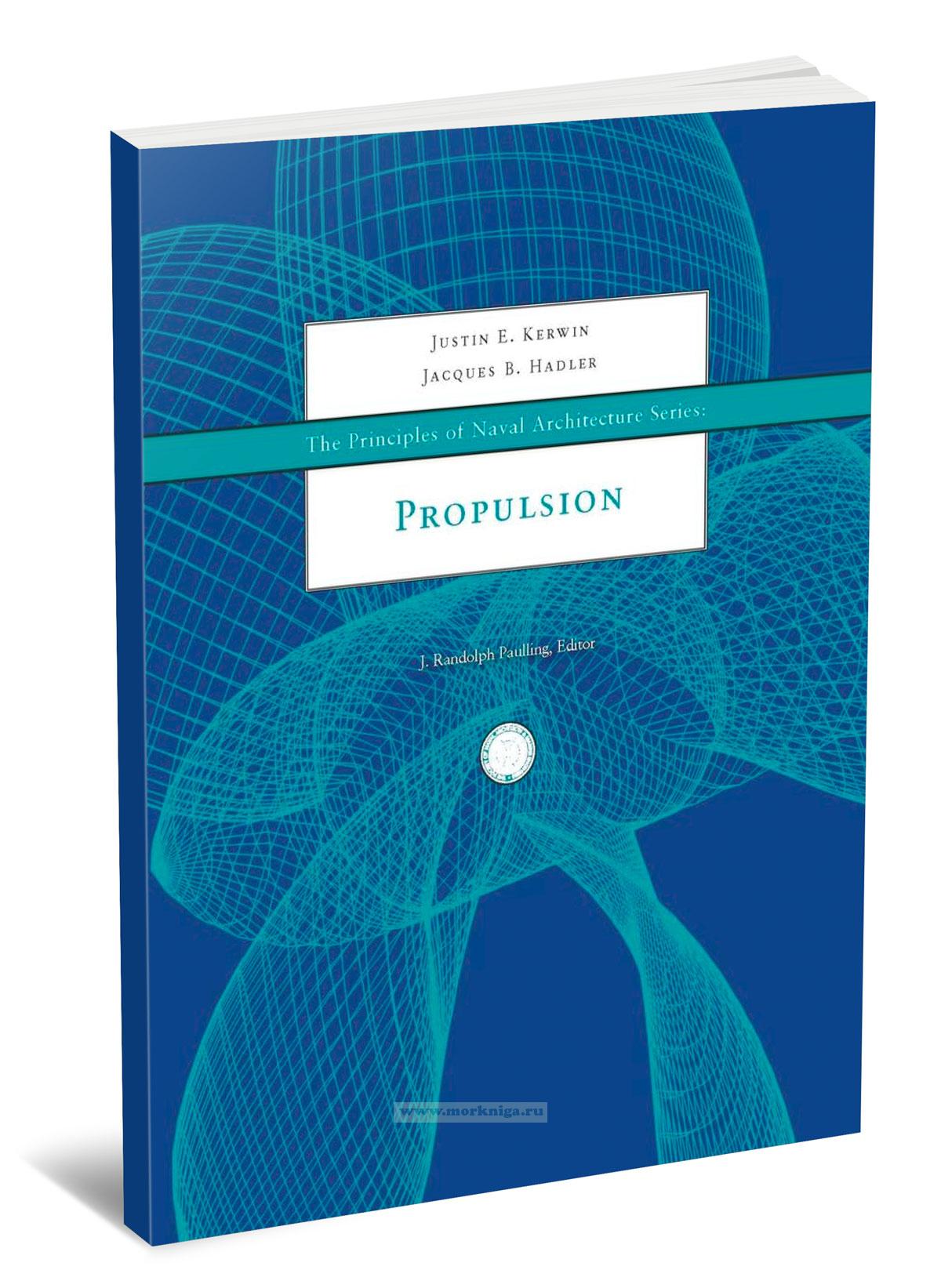
Propulsion/Судовые движители

Артикул: 00-01120781
в желания Нет в наличии
Автор: Justin E. Kerwin, Jacques B. Hadler
Издательство: The Society of Naval Architects and Marine Engineers (все книги издательства)
Место издания: New Jersey
ISBN: 978-0-939773-83-1
Год: 2010
Переплет: Мягкая обложка
Страниц: 183
Вес: 467 г
Сообщить о поступлении.
Издание на английском языке
This book presents a modern and comprehensive guide to naval architecture and ship design. It covers the latest analysis and modeling techniques, such as numerical simulation, fluid dynamics, and optimization technologies, as well as the fundamentals of mathematics and science required by modern engineers. Particular attention is paid to the development of design tools, including work with propellers, hydrodynamic theories, and measurement techniques. This book is intended for engineers, students, and professionals seeking to understand the principles of modern naval architecture and to develop an innovative approach to ship and fleet design.
Content
An Introduction to the Series
Foreword
Preface
Acknowledgments
Authors' Biography
Nomenclature
1. Powering of Ships
1.1. Historical Discussion
1.2. Types of Ship Machinery
1.3. Definition of Power
1.4. Propulsive Efficiency
2. Two-Dimensional Hydrofoils
2.1. Introduction
2.2. Foil Geometry
2.3. Conformal Mapping
2.3.1. History
2.3.2. Conformal Mapping Essentials
2.3.3. The Karman-Trefftz Mapping Function
2.3.4. The Kutta Condition
2.3.5. Pressure Distributions
2.3.6. Examples of Propellerlike Karman-Trefftz Sections
2.3.7. Lift and Drag
2.3.8. Mapping Solutions for Foils of Arbitrary Shape
2.4. Linearized Theory for a Two-Dimensional Foil Section
2.4.1. Problem Formulation
2.4.2. Vortex and Source Distributions
2.5. Glauert's Solution for a Two-Dimensional Foil
2.5.1. Example: The Flat Plate
2.5.2. Example: The Parabolic Mean Line
2.6. The Design of Mean Lines: The Naca a-Series
2.7. Linearized Pressure Coefficient
2.8. Comparison of Pressure Distributions
2.9. Solution of the Linearized Thickness Problem
2.9.1. Example: The Elliptical Thickness Form
2.9.2. Example: The Parabolic Thickness Form
2.10. Superposition of Camber, Angle of Attack, and Thickness
2.11. Correcting Linear Theory Near the Leading Edge
2.12. Two-Dimensional Vortex Lattice Theory
2.12.1. Constant Spacing
2.12.2. Cosine Spacing
2.12.3. Converting from Гn, to y (x)
2.12.4. Drag and Leading Edge Suction
2.12.5. Adding Foil Thickness to Vortex Lattice Method
2.13. Two-Dimensional Panel Methods
2.13.1. Source-/Vortex-Based Method
2.13.2. Surface Vorticity Method
2.13.3. Perturbation Potential Method
2.13.4. Sample Results
2.14. The Cavitation Bucket Diagram
2.15. Viscous Effects: Two-Dimensional Foil Sections
2.15.1. Coupled Inviscid/Boundary-Layer Solution
2.15.2. Measures of Boundary-Layer Thickness
2.15.3. Forces
2.15.4. Transition
2.15.5. Computing the Coupled Boundary Layer/Outer Flow
2.15.6. Reynolds Number Effects on Lift and Drag
2.15.7. Advanced Blade Sections
3. Three-Dimensional Hydrofoil Theory
3.1. Introductory Concepts
3.2. The Strength of the Free Vortex Sheet in the Wake
3.3. The Velocity Induced by a Three-Dimensional Vortex Line
3.4. Velocity Induced by a Straight Vortex Segment
3.5. Linearized Lifting-Surface Theory for a Planar Foil
3.5.1. Formulation of the Linearized Problem
3.5.2. The Linearized Boundary Condition
3.5.3. Determining the Velocity
3.5.4. Relating the Bound and Free Vorticity
3.6. Lift and Drag
3.7. Lifting Line Theory
3.7.1. Glauert's Method
3.7.2. Vortex Lattice Solution for the Planar Lifting Line
3.7.3. The Prandtl Lifting Line Equation
3.8. Lifting Surface Results
3.8.1. Exact Results
3.8.2. Vortex Lattice Solution of the Linearized Planar Foil
4. Hydrodynamic Theory of Propulsors
4.1. Inflow
4.2. Notation
4.3. Actuator Disk
4.4. Axisymmetric Euler Solver Simulation of an Actuator Disk
4.5. The Ducted Actuator Disk
4.6. Axisymmetric Euler Solver Simulation of a Ducted Actuator Disk
4.7. Propeller Lifting Line Theory
4.7.1. The Velocity Induced by Helical Vortices
4.7.2. The Actuator Disk as a Particular Lifting Line
4.8. Optimum Circulation Distributions
4.8.1. Assigning The Wake Pitch Angle Bw
4.8.2. Properties of Constant Pitch Helical Vortex Sheets
4.8.3. The Circulation Reduction Factor
4.8.4. Application of the Goldstein Factor
4.9. Lifting Line Theory for Arbitrary Circulation Distributions
4.9.1. Lerbs Induction Factor Method
4.10. Propeller Vortex Lattice Lifting Line Theory
4.10.1. Hub Effects
4.10.2. The Vortex Lattice Actuator Disk
4.10.3. Hub and Tip Unloading
4.11. Propeller Lifting-Surface Theory and Computational Methods
4.11.1. Propeller Blade Geometry Employing Cylindrical Sections
4.11.2. Noncylindrical Blade Geometry Definition
4.11.3. Blade Geometry Data Transfer
4.11.4. Historical Background of Propeller Lifting-Surface Theory
5 Unsteady Propeller Forces
5.1. Types of Unsteady Forces
5.2. Basic Equations for Linearized Two-Dimensional Unsteady Foil Theory
5.3. Analytical Solutions for Two-Dimensional Unsteady Flows
5.4. Numerical Time Domain Solution
5.5. Wake Harmonics and Unsteady Propeller Forces
5.6. Transverse Alternating Forces
5.7. Unsteady Three-Dimensional Computational Methods for Propellers
5.8. Unsteady Propeller Force Example
6. Theory of Cavitation Spyros A. Kinnas
6.1. Introduction
6.2. Noncavitating Flow - Cavitation Inception
6.3. Cavity Flows - Formulation of the Problem
6.4. Cavitating Hydrofoils Linearized Formulation
6.4.1. Partially Cavitating Hydrofoils
6.4.2. Supercavitating Hydrofoils
6.4.3. Analytical Solution for the Partially Cavitating Flat Plate
6.4.4. Analytical Solution for the Supercavitating Flat Plate
6.5. Numerical Methods
6.6. Leading Edge Correction
6.7. Panel Methods for Two-Dimensional and Three-Dimensional Cavity Flows
6.8. Cavitating Propeller
6.9. Comparisons with Experiments
6.10. Effects of Viscosity on Cavitation
6.11. Design in the Presence of Cavitation
7. Scaling Laws and Model Tests
7.1. Introduction
7.2. Law of Similitude for Propellers
7.3. Open-Water Tests
7.4. Model Self-Propulsion Tests
7.4.1. Wake
7.4.2. Augment of Resistance and Thrust Deduction
7.4.3. Relative Rotative Efficiency
7.4.4. Hull Efficiency
7.4.5. Quasi-Propulsive Efficiency
7.4.6. Standard Procedure for Performance Predictions
7.5. Wake Survey
7.6. Propeller Cavitation Tests
7.6.1. Variable Pressure Water Tunnel
7.6.2. Presentation of Data
7.6.3. Variable Pressure Circulating Water Channel
7.6.4. Variable Pressure Towing Tank
8. Propeller Design
8.1. Introduction
8.2. The Design and Analysis Loop
8.3. Definition of the Problem
8.4. Preliminary Design
8.4.1. Diameter
8.4.2. Number of Revolutions
8.4.3. Number of Blades
8.4.4. Radial Load Distribution
8.4.5. Blade Outline
8.4.6. Skew
8.4.7. Camber and Angle of Attack
8.5. Design Point
8.6. Analysis and Optimization of the Design
8.6.1. Propeller Design by Systematic Series
8.6.2. Propeller Design by Circulation Theory
9. Waterjet Propulsion
9.1. Hydrodynamic Issues
9.2. Inlet Analysis
9.3. Pump Design and Analysis
9.3.1. Coupled Euler/Lifting-Surface Method
9.3.2. RANS Methods
9.4. Tip Leakage Flow
10. Other Propulsion Devices
10.1. Introduction
10.2. Tunnel Sterns
10.3. Vertical-Axis Propellers
10.4. Overlapping Propellers
10.5. Supercavitating Propellers
10.6. Surface Piercing Propellers
10.7. Controllable-Pitch Propellers
11. Propeller Strength
11.1. Introduction
11.2. Stresses Based on Modified Cantilever Beam Analysis
11.3. Bending Moments Due to Hydrodynamic Loading
11.4. Centrifugal Force
11.4.1. Bending Moments Due to Blade Rake
11.4.2. Bending Moments Due to Blade Skew
11.5. Strength Analysis
11.6. Stresses Based on Finite Element Analysis
11.7. Minimum Blade Thickness Based on Classification Society Rules
11.8. Fatigue Analysis
11.9. Materials
12. Ship Standardization Trials
12.1. Purpose of Trials
12.2. Preparation for Trials
12.3. General Plan of Trials
12.4. Measurement of Speed
12.5. Analysis of Speed Trials
12.6. Derivation of Model-Ship Correlation Allowance
References
Index
Отзывы покупателей (0)
У этого товара пока нет отзывов. Поделитесь впечатлением первым.