

Каталог▲▼
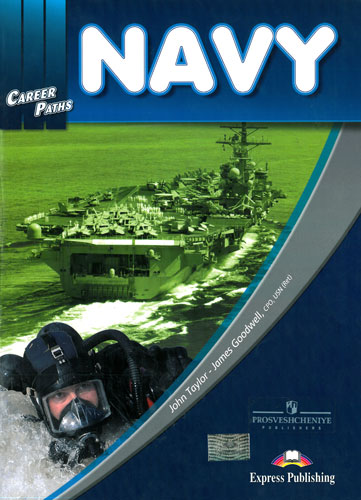
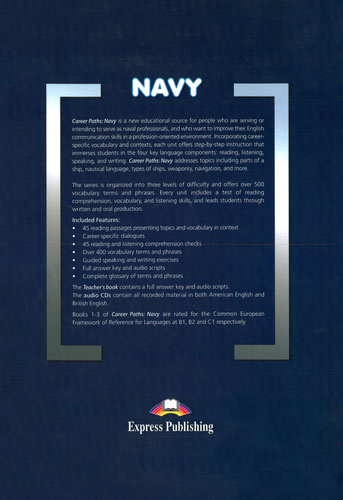
Navy. Book 1. Book 2. Book 3/Флот. Книга 1. Книга 2. Книга 3

Артикул: 00-01006593
в желания В наличии
Автор: John Taylor, James Goodwell
Издательство: Express Publishing (все книги издательства)
Место издания: England
ISBN: 978-1-78098-457-5
Год: 2011
Переплет: Мягкая обложка
Страниц: 160
Вес: 619 г
С этим товаром покупают
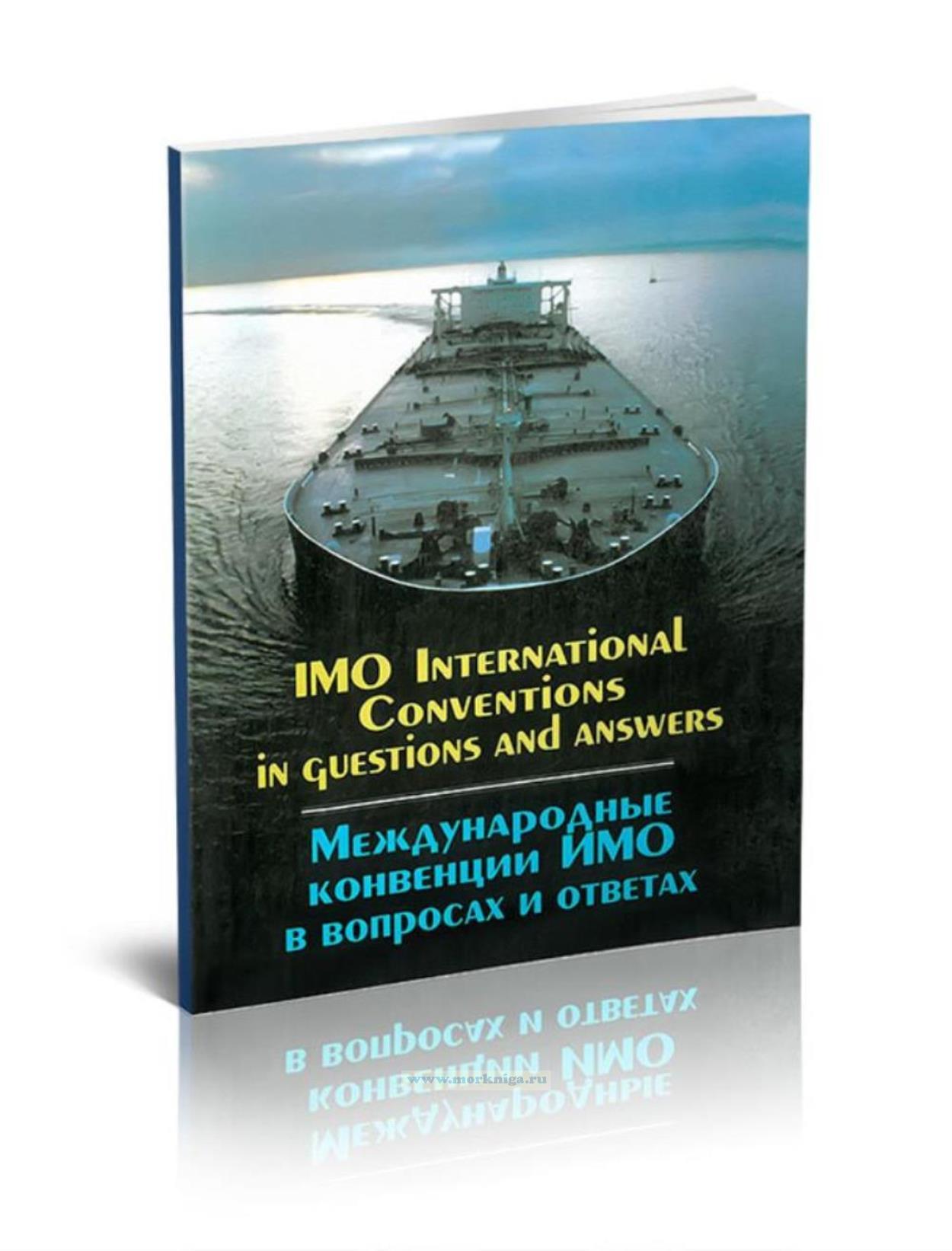 Международные конвенции ИМО в вопросах и ответах для моряков (пособие по английскому языку)
  Деловая переписка на английском языке. English Business Letter Writing. Части 1 (Письма-запросы и ответы на них) и 2 (Письма-претензии и их урегулирование)
  Подготовка к тесту MARLINS
 Книга на английском языке
Book 1
A Navy ship must be durable and balanced to handle long periods at sea. The hull needs strong shell plating. Areas below the waterline up to the freeboard must resist constant water pressure. Higher up, solid bulwarks are needed to protect the weather deck.
A ship's superstructures must withstand powerful wind and sea spray. A well-maintained mast is especially important to keep safety lights working. Underneath the ship, the propeller powers the ship. Proper maintenance of these screws prevents serious failures at sea.
Table of contents
Unit 1 - Ship Structure: Exterior
Unit 2 - Ship Structure: Interior
Unit 3 - Nautical Directions
Unit 4-Ship Systems
Unit 5 - Audio Communication
Unit 6 - Visual Communication
Unit 7-Weather
Unit 8 - First Aid
Unit 9 - Rank and Rate
Unit 10 - Ship Organization: Command Structure
Unit 11 - Ship Organization: Departments and Divisions
Unit 12 - Uniforms
Unit 13 - Shipboard Duties
Unit 14-Bills
Unit 15 - Conditions of Readiness
Glossary
Book 2
From massive aircraft carriers to small patrol ships, modern navies have a wide range of ships to call upon. Yet regardless of differences in size and missions, all ships can be assessed according to the same general characteristics. How a ship measures in each category determines her primary mission.
Table of contents
Unit 1 - Ships: Ship Characteristics
Unit 2 - Ships: Aircraft Carriers
Unit 3 - Ships: Cruisers
Unit4-Ships: Destroyers and Frigates
Unit 5 - Ships: Submarines
Unit 6 - Ships: Amphibious Warfare Ships
Unit 7 - Ships: Patrol Combatants
Unit 8 - Weapons: Missiles and Rockets
Unit 9 - Weapons: Mines and Torpedoes
Unit 10 - Weapons: Guns
Unit 11 - Seamanship: Marlinespike Seamanship
Unit 12-Seamanship: Mooring
Unit 13-Seamanship: Anchoring
Unit 14-Seamanship:Towing
Unit 15 - Seamanship: Deck Seamanship
Glossary
Book 3
The Navy's primary responsibility is to prepare for combat, but it takes many non-combat personnel to make that happen. Civilians in the Military Sealift Command, or MSC, provide vital support to ensure ships are properly serviced. MSC command ships coordinate important missions that keep Navy ships supplied and ready for combat.
Navy ships are typically away from land for long periods. Since they can only store limited quantities of fuel, food and other supplies, they rely on a division of the MSC, the Naval Fleet Auxiliary Force, to bring replenishments. Tankers called fleet replenishment oilers can refuel ships at sea, while ammunition ships bring new stores of ammunition.
Table of contents
Unit 1 - Fleet Support Ships and Service Craft
Unit 2 - Mine Warfare Ships
Unit 3 - Boats
Unit 4 - Boat Crews and Equipment
Unit 5 - Aircraft: Parts of an Aircraft
Unit 6 - Aircraft: Attack Aircraft
Unit 7 - Aircraft: Support Aircraft
Unit 8 - Aircraft: Aircraft Squadrons
Unit 9 - Navigation: Elements of Navigation
Unit 10 - Navigation: Navigation Methods
Unit 11 - Navigation: Navigation Instruments and Equipment
Unit 12 - Navigation: Tides, Currents, and Winds
Unit 13 - Security
Unit 14 - Safety and Emergency Response
Unit 15 - Damage Control
Glossary
Отзывы покупателей (0)
У этого товара пока нет отзывов. Поделитесь впечатлением первым.