

Каталог▲▼
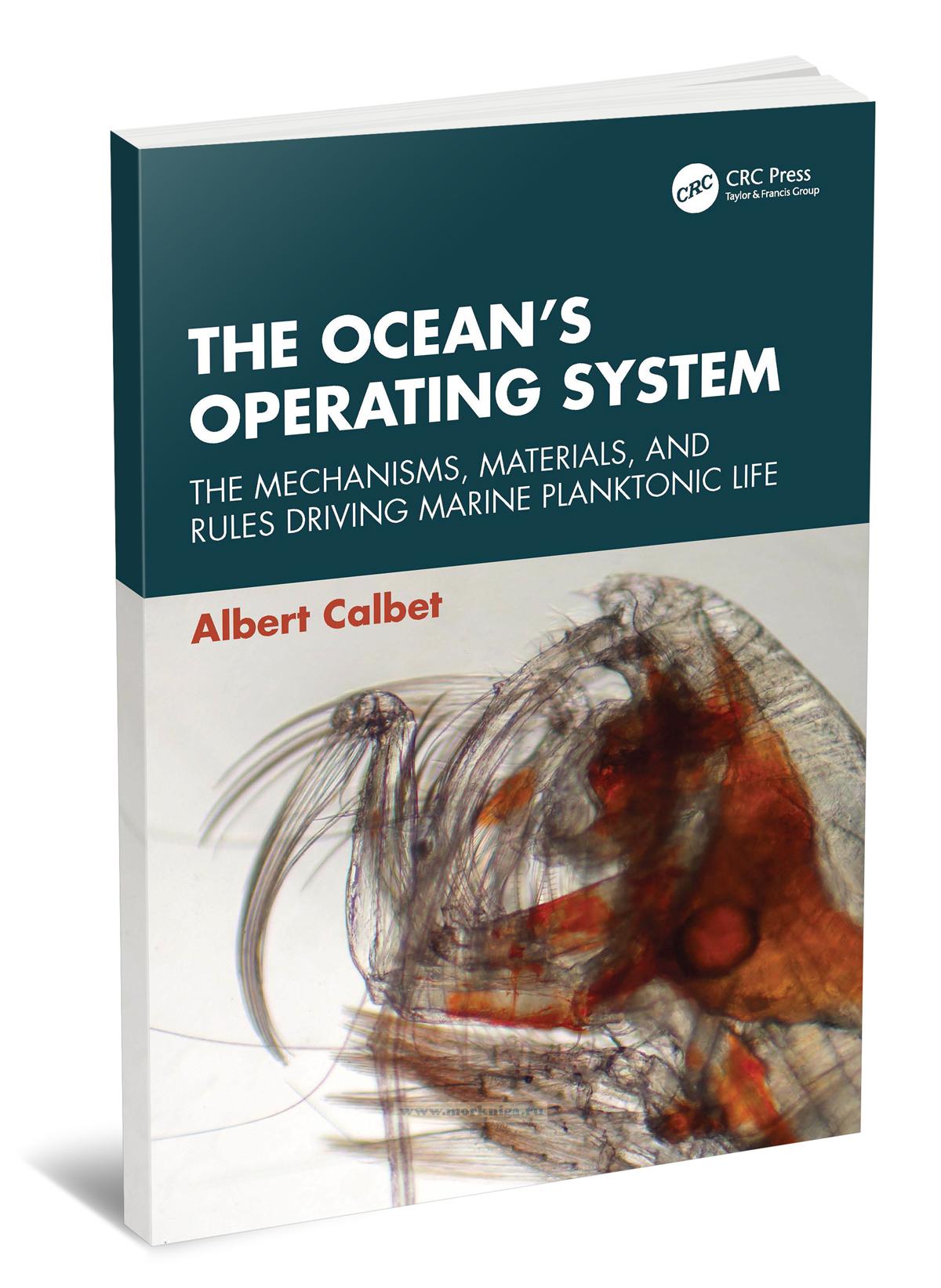
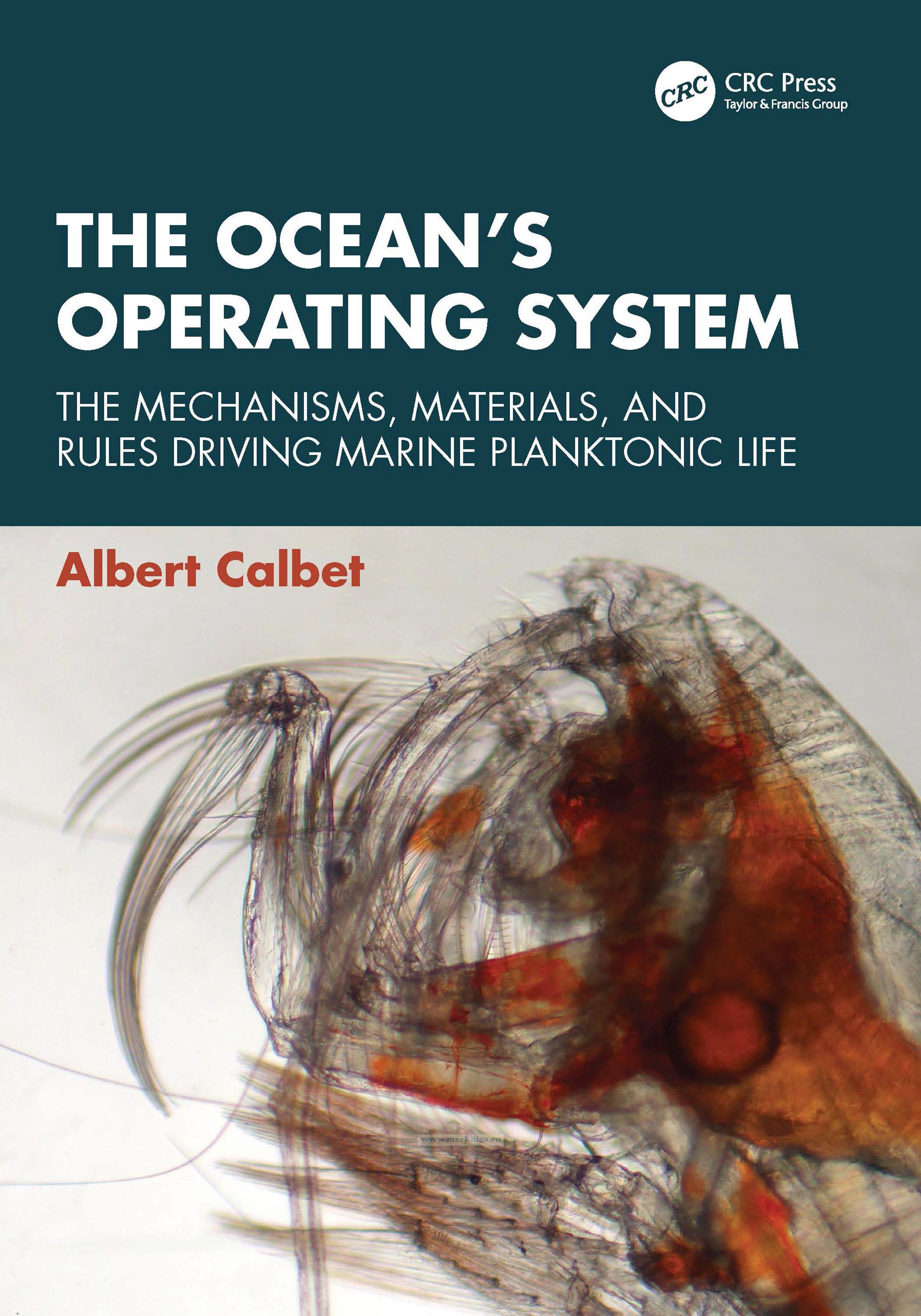
The Ocean's Operating System. The Mechanisms, Materials, and Rules Driving Marine Planktonic Life/Операционная система океана. Механизмы, материалы и правила, управляющие жизнью морского планктона
Артикул: 00-01126011
в желания В наличии
Автор: Albert Calbet
Издательство: CRC Press (все книги издательства)
ISBN: 978-1-041-27182-6
Год: 2026
Формат: А4 (210х297 мм)
Переплет: Мягкая обложка
Страниц: 173
Вес: 465 г
Издание на английском языке
This book explores ocean life and the mechanisms that govern marine ecosystems. It examines plankton, food webs, carbon and nutrient cycling, the influence of light, temperature, pressure, and turbulence, as well as the role of viruses, parasites, and vertical migrations. Special attention is paid to the adaptation of organisms, genomic ecology, climate change, and modern methods for monitoring and forecasting ocean conditions.
Content
Preface
Author Biography
Glossary
Part I. major players and core rules
1. The ocean's cast: who actually runs the sea?
What we see and what actually rules
The plankton engine: producers, recyclers, predators, and viruses
How the machine works: moving carbon, nutrients, and energy
The visible giants and the wider cast
Recommended Literature
2. Life at low reynolds number: viscosity rules the microscale
Moving and feeding in a syrupy sea
Sinking, suspension, and body design
Sensing, encounters, and turbulence windows
Temperature, diversity of solutions, and what to measure
Recommended Literature
3. Physical rate governors: temperature, light, and pressure
Temperature: the pace and the price
Light: fuel, hazard, and clock
Pressure: the monotone tax on volume
Interactions: how the governors combine
Recommended Literature
4. Chemistry as language
Detection and decision: from microbes to larvae
Coordination, conflict, and countermeasures
Dialogues that shape events: blooms, export, and settlement
Tools, predictions, and rules that travel
Recommended Literature
5. Gels and microhabitats
Seawater as a soft, structured medium
From phycospheres to marine snow
Metals, vitamins, and Black Queen functions
Thresholds and budgets: the transport-reaction rulebook
Shifting parameters: climate forcing and predictable rewiring
Recommended Literature
6. Size rules
Size, metabolism, and the metabolic theory of ecology
The temperature-size rule
Geometry, transport, and encounter mechanics
Environmental modulators of the size spectrum
Recommended Literature
Part II. Processes that move energy and matter
7. Borrowed energy: mixotrophy, symbiosis, and theft
How to run two engines in one hull?
Modes of borrowed power and their trade-offs
Environmental windows, encounter geometry, and clocks
Keeping the bargain: choice, policing, and privatization
Ecological footprints: size spectra, carbon routing, and recognizable signatures
Futures: how warming, stratification, acidification, and deoxygenation rewrite contracts
Recommended Literature
8. The mechanisms of feeding
Cell-scale devices: nanoflagellates and choanoflagellates
Dinoflagellate capture: engulfment, peduncles, and pallia
Ciliate moving screens and raptorial machinery
Hairy rakes and adaptive modes: copepod mechanics
Mucous filters at organismal scale: appendicularian houses and salp nets
Recommended Literature
9. Defenses and deterrents
Foundations: what a defense must change
Chemical deterrence and inducible responses
Mechanical architecture: spines, chains, walls, and the physics of handling
Slime, gels, and the control of near-field physics
Dynamic assemblies, stoichiometry, and the shifting guild of enemies
Recommended Literature
10. Turbulence: the sculptor at small scales
Feeding and sensing in moving water
Growth, chains, and the architecture of aggregates
Reproduction, thin layers, and the ordering of timescales
Intermittency, niches, and prediction
Recommended Literature
11. Building with minerals: the passive branch of the ocean's carbon pump
Windows, regions, and the reweighting of pathways
Reading the pump and looking ahead to the active branch
Recommended Literature
12. Diel vertical migration: the clockwork conveyor
The light-governed timetable: isolumes, risk, and the shape of the commute
Energetics across layers of temperature and oxygen
The machinery of motion: buoyancy, biomechanics, and the cost of the shuttle
Community choreography: who moves, who stays, and the games along the rails
The active pump
Recommended Literature
13. The planktonic food web: networks that govern flow
Two branching paths at the base: dissolved versus particulate routing
Primary production, resource supply, and size structure
The microbial loop: reclaiming dissolved pools and tightening surface budgets
Who packages, who recycles: grazer guilds, gels, and ballast
From cells to pellets and back: stoichiometry, cofactors, and remineralization
Physical windows: turbulence, stratification, light, and oxygen
Regional expressions of the network
Diagnosing routing and estimating rates
Recommended Literature
14. Viruses and parasites: mortality, recycling, and control
Mortality without mouths: viral lysis and parasitic takeover
From death to diet: the chemistry of what mortality produces and how it is reused
Control, selectivity, and the choreography of who dies and who eats
Regional expressions
Climate interactions: warming, stratification, acidification, deoxygenation, and extremes
Recommended Literature
Part III. Landscapes and edges
15. Nutrients and vertical structure: sea-surface microlayer, thermoclines, nutriclines, DCMs, and OMZs
Sea-surface microlayer: composition, transport, and ecological function
Thermoclines and density structure: mixing constraints, entrainment, and residence times 9
Nutriclines: gradient formation, supply modes, and cellular stoichiometry
Deep chlorophyll maxima: physiological tuning, microbial coupling, and flux outcomes
Oxyclines and oxygen-minimum zones: physiological constraints and nitrogen loss pathways
Interfaces and boundaries beyond the SML: aggregates, pycnoclines, shelves, and sediments
Linking structures to elemental budgets and predictable ecological responses
Recommended Literature
16. Upwelling margins and retention zones
Spawning clocks and egg buoyancy
First-hours physiology across sharp gradients
Vertical tactics, headlands, and shadow nurseries
Jets, filaments, canyons, and river-plume retention
Heatwaves and compressed margins
Recommended Literature
17. Edges: cryosphere, seafloor and shores, and human footprints
Cryosphere edges: brine channels, under-ice ceilings, and the moving ice margin
Seafloor and other edges
Urban and industrial edges: thin hazards and opportunistic corridors
Recommended Literature
Part IV. Time, information, and practice
18. Seeds, cysts, and resting stages
Materials, architectures, and the making of durable life
From water to mud: export, transport, and the seabed as a living archive
Cues, timing, and early trajectories
System-wide consequences
Recommended literature
19. Fast evolution, slow constraints
Fast levers across drivers: how acclimation buys time
Genetic mechanisms of adaptation: how baselines are retuned
Forecasting with genetics and physics
Recommended Literature
20. Molecular and genomic ecology
From inventories to programs: what different omics layers actually say
From genomes to organisms: assembling pangenomes, SAGs, and MAGs
Traits in code: what genes tell us about function and limitation
From molecules to rates: tying gene expression to flux
Population genomics and the geography of selection
Viruses, horizontal gene transfer, and the moving frontier of function
Environmental DNA and RNA: presence without capture
Linking genes to particles and structure: who builds, who sticks, who sinks
Methodological realities: noise, compositionality, and inference
From traits to rules: embedding genes in models
Macroorganisms in the molecular frame: beyond microbes
Autonomous and in situ molecular oceanography
Ethics, standards, and the global commons of sequence
The dark genome and the frontier of function
Recommended Literature
21 reading ahead: ocean forecast, early warnings, and management
Future plankton communities: who is likely to run tomorrow's sea?
Tools to watch a moving target
From prediction to prevention: using knowledge to reduce harm
Preparing the next generation to read a changing ocean
Index
Отзывы покупателей (0)
У этого товара пока нет отзывов. Поделитесь впечатлением первым.