

Каталог▲▼
Elements of Ship Dynamics and Hydromechanics/Элементы динамики судна и гидромеханики




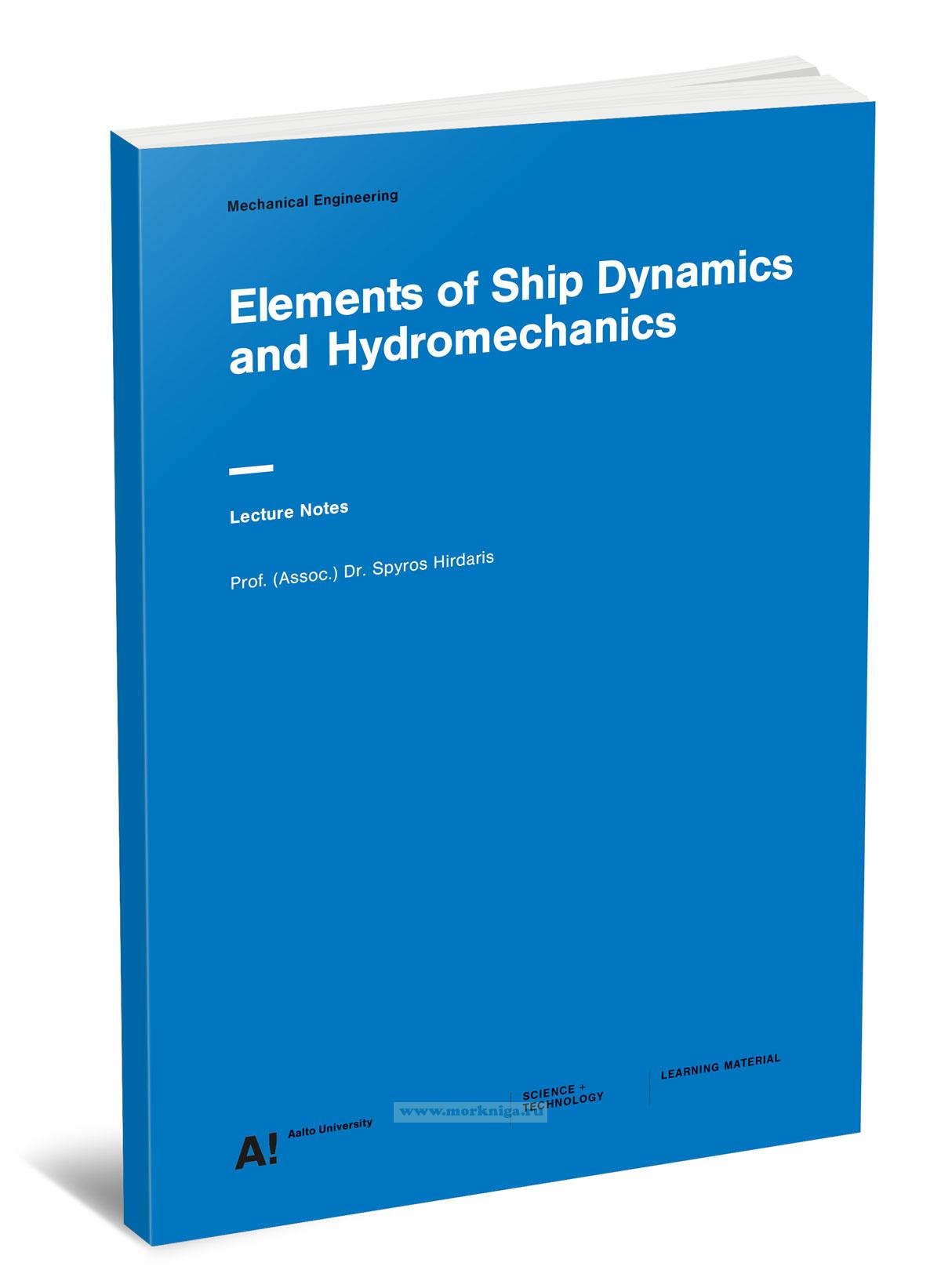
Издание на английском языке
This publication is devoted to vessel dynamics and its performance in rough seas. The book covers resistance, thrust, steering and stabilizing systems, the fundamentals of wave mechanics, sea wave statistics, ship motion, wave loads, and seaworthiness analysis methods. Model testing, in-kind measurements, additional resistance in rough seas, maneuverability, and the application of probabilistic methods in marine calculations are covered separately.
Content
Contents
List of Figures
List of Tables
Chapter 1: Introduction to Ship Dynamics
1. Preamble
2. Some definitions
3. Specialist topics
4. The influence of ship dynamics on ship design development
5. Questions
6. References
Chapter 2: Controlling Ship Dynamics
1. Introduction
2. Key definitions
3. The dynamics of resistance and thrust
3.1 Powering calculations
3.2 Ship thrust
4. Ship rudder dynamics
5. The influence of slow speed maneuverability
6. Stabilisation systems
7. Control Systems
8. Autopilot steering
9. Questions
10. References
Chapter 3: Wave mechanics
1. Wave formation
2. Brief overview of wave theories
3. The regular wave
4. Questions
5. References
Chapter 4: The statistical representation of irregular waves
1. Introduction
2. Wave superposition and Fourier analysis
3. The wave energy spectrum
4. Ocean wave spectra
5. Directional Spreading
6. The statistics of sea states
7. Extreme waves
8. Questions
9. References
Chapter 5: Introduction to ship motions
1. Introduction
2. Basic definitions
3. The dynamics of the rigid ship
3.1 Free undamped vibration of 1- DOF system
3.2 Free damped vibration of single DOF system
4. Forced vibration of 1- DOF system
5. The concept of dynamic magnification factor
6. Response to random loading
7. Questions
8. References
Chapter 6: Ship motions in regular waves
1. Introduction
2. Uncoupled heave motion
3. Uncoupled pitch motion
4. Coupled heave and pitch motions
5. Small Amplitude Roll
6. Roll in large amplitudes
7. Questions
8. References
Chapter 7: Seakeeping methods
1. Introduction
2. Evaluation of hydrodynamic forces
3. Seakeeping in 6-DOF
4. Linear seakeeping analysis methods
4.1 Strip theory
4.2 Conformal Mapping
4.3 Panel methods
5. Non-linear seakeeping analysis methods
6. Questions
7. References
Chapter 8: Wave Loads
1. Introduction
2. Classification of wave loads
3. Murray's method
4. Wave induced responses
5. The influence of nonlinear hydrodynamic actions
6. Ship responses in irregular waves
7. Introduction to Hydroelasticity of Ships
8. Questions
9. References
Chapter 9: Additional Seakeeping Topics
1. Introduction
2. Seakeeping criteria
3. Introduction to model testing
4. The importance of similarity laws in seakeeping experiments
5. Seakeeping experiments
6. Full scale measurements (FSM)
7. Questions
8. References
Chapter 10: Added Resistance and Maneuvering
1. Introduction
2. Ship added resistance in waves
3. Methods to calculate added resistance in waves
4. Introduction to maneuvering theory
5. Captive Model Tests (PMM)
6. Straight-Line Tests in a Towing Tank
7. Planar Motion Mechanism (PMM) Technique
8. Principles of directional stability
9. Questions
10. References
Appendix A: Review of Probability and Statistics for Marine Applications
Отзывы покупателей (0)
У этого товара пока нет отзывов. Поделитесь впечатлением первым.