

Каталог▲▼
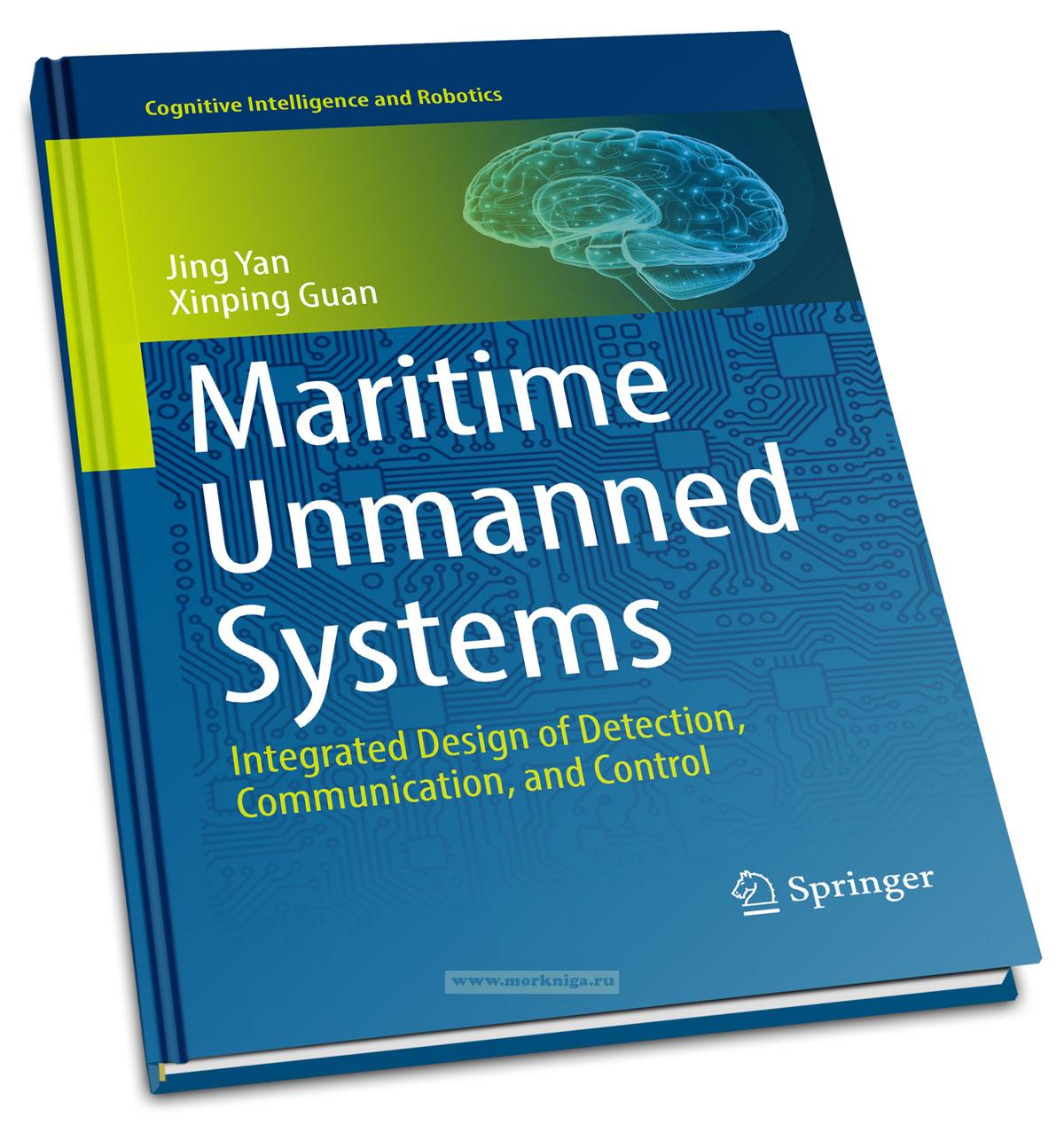
Maritime Unmanned Systems. Integrated Design of Detection, Communication, and Control/Морские беспилотные системы. Комплексное проектирование систем обнаружения, связи и управления



Артикул: 00-01124571
в желания В наличии
Автор: Jing Yan, Xinping Guan
Издательство: Springer (все книги издательства)
Место издания: Singapore
ISBN: 978-981-95-6906-9
Год: 2026
Формат: А4 (210х297 мм)
Переплет: Твердая обложка
Страниц: 262
Вес: 808 г
Издание на английском языке
This book focuses on the integrated design of maritime unmanned systems, integrating detection, communication, and control into a single technological architecture. It examines underwater and surface target models, active and passive measurement methods, data fusion, signal sharing for communication and detection, unmanned vehicle swarm control, collision avoidance, target tracking, and underwater teleoperation. Special attention is given to practical application scenarios, including anti-submarine warfare, search and rescue, maritime infrastructure maintenance, and port monitoring systems.
Content
1. Introduction
1.1. Overview of Maritime Unmanned Systems
1.1.1. Collaborative Connotation of MUSs
1.1.2. Co-Design of Detection, Communication, and Control
1.2. Difficulties and Challenges
1.2.1. Model Construction Level
1.2.2. Networking-Transmission Level
1.2.3. Detection-Communication Level
1.2.4. Cooperative Control Level
1.3. Research Progress on Integration Design
1.3.1. Active-Passive Detection with Multi-Source Information Fusion
1.3.2. Networking and Transmission
1.3.3. Cooperative Control of Maritime-Aerial Unmanned Platforms
1.4. Application Scenarios
1.4.1. Maritime Joint Anti-submarine Operations
1.4.2. Amphibious Assaults on Islands
1.4.3. Maritime Search and Rescue
1.4.4. Maritime Infrastructure Operation and Maintenance
References
2. Integrated Detection via Active and Passive Measurements
2.1. Introduction
2.2. Network Model and Problem Formulation
2.2.1. Kinematic Model of Target
2.2.2. Active and Passive Measurement Models
2.2.3. Communication Energy Model
2.2.4. Problem Formulation
2.3. Underwater Target Detection
2.3.1. Chi-Square Test Based Local Decision Rule
2.3.2. Hybrid Bayesian Fusion Algorithm
2.3.3. Detection Performance Analysis
2.4. Technology Practice
2.4.1. Case Study I: Detection with Local Measurement
2.4.2. Case Study II: Detection with External Fusion Measurement
2.5. Summary
References
3. Integrated Design of Detection and Communication
3.1. Introduction
3.2. Integrated Wave Design
3.2.1. Communication-Based Shared Waveform
3.2.2. Detection-Based Shared Waveform
3.3. Implementation of the Integration System
3.3.1. System Hardware Architecture
3.3.2. Operational Procedure
3.4. Technology Practice
3.4.1. Case Study I: Integrated Design with Communication Signal
3.4.2. Case Study II: Integrated Design with Detection Signal
3.5. Summary
References
4. Integrated Design of Communication and Control
4.1. Introduction
4.1.1. Task I: Communication-Efficient and Collision-Free Motion Planning
4.1.2. Task II: Optimally Persistent Formation with Unknown Interaction
4.2. Communication-Efficient and Collision-Free Motion Planning
4.2.1. SNR Prediction in Fading Channel
4.2.2. Model-Free and Collision-Free Motion Planning Algorithm
4.3. Optimally Persistent Formation with Unknown Interaction Topology
4.3.1. Topology Inference and Optimization
4.3.2. Formation Controller for Multiple Underwater Vehicles
4.4. Technology Practice
4.4.1. Case Study I: Collision-Free Motion Planning for a Single Underwater Vehicle
4.4.2. Case Study II: Topology-Aware Formation for Multiple Underwater Vehicles
4.5. Summary
References
5. Integrated Design of Detection and Control
5.1. Introduction
5.2. Model Construction and Problem Formulation
5.3. Strategy Design for Detection and Tracking Control
5.3.1. Heterogeneous Detection Mode
5.3.2. DDPG-Based Tracking Algorithm
5.4. Performance Analysis
5.4.1. Detection Probability
5.4.2. Topology Connection and Convergence Analysis
5.5. Technology Practice
5.5.1. Case Study I: Detection and Tracking Control for a Surface Target
5.5.2. Case Study II: Detection and Tracking Control for an Underwater Target
5.6. Summary
References
6. Integrated Design of Detection, Communication and Control
6.1. Introduction
6.2. Co-design of Detection, Communication and Control for Underwater Target Tracking
6.2.1. Model Construction and Problem Formulation
6.2.2. Integrated Waveform Design
6.2.3. Design of Tracking Controller
6.3. Co-design of Detection, Communication and Control for Underwater Teleoperation
6.3.1. Model Construction and Problem Formulation
6.3.2. Construction of Underwater Teleoperation Solution
6.4. Technology Practice
6.4.1. Case Study I: Integrated Design for Target Tracking Control
6.4.2. Case Study II: Integrated Design for Teleoperation Control
6.5. Summary
References
7. Demonstration Application in Port Monitoring System
7.1. Introduction
7.2. Integration Methods for Port Monitoring System
7.2.1. Self-localization and Motion Control
7.2.2. Ship Attitude Monitoring
7.2.3. Management Platform Design
7.3. Construction of Port Monitoring System
7.3.1. Hardware Design
7.3.2. Software Design
7.4. Technology Practice
7.4.1. Case Study I: Effectiveness of Detection, Communication and Control
7.4.2. 3D Reconstruction of Port Basin
7.4.3. Case Study II: Construction of Management Platform
7.5. Summary
References
8. Future Research Directions
8.1. Open Issues for Further Research
8.2. Directions for Future Research
8.3. Summary
Отзывы покупателей (0)
У этого товара пока нет отзывов. Поделитесь впечатлением первым.