

Каталог▲▼
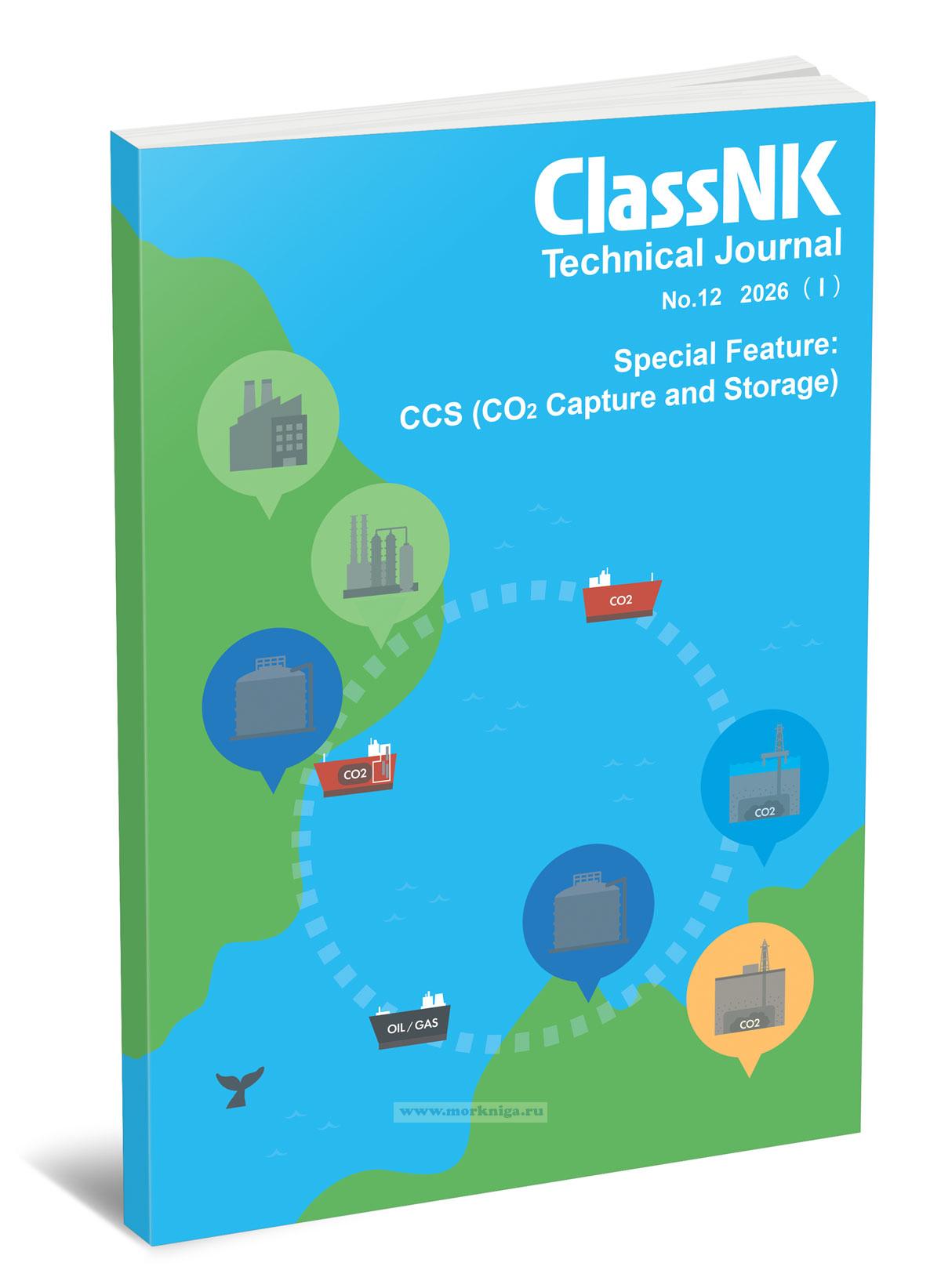
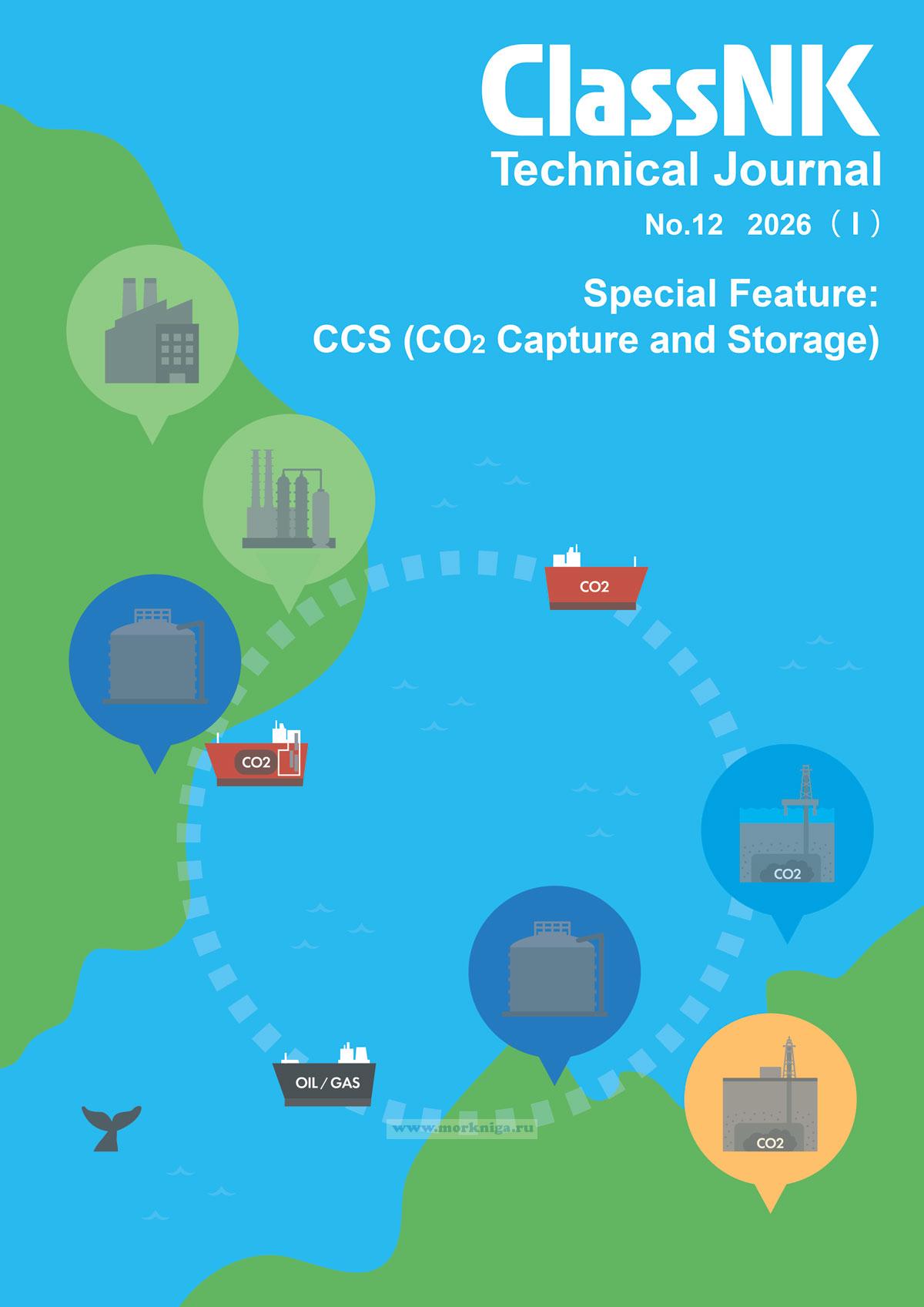
Technical Journal No.12 2026 (I). Special Feature: CCS (CO2 Capture and Storage)/Технический журнал № 12, 2026 (I). Спецвыпуск: Улавливание и хранение CO2 (CCS)
Артикул: 00-01124459
в желания В наличии
Издательство: ClassNK (все книги издательства)
Место издания: Japan
Год: 2026
Формат: А4 (210х297 мм)
Переплет: Мягкая обложка
Страниц: 118
Вес: 298 г
Издание на английском языке
The book is a collection of ClassNK technical materials covering current developments in the maritime industry and greenhouse gas emissions reduction. The publication examines technologies for CO2 capture, storage, and utilization on board ships, the transportation of liquefied CO2, IMO and EU regulatory requirements, developments by NEDO and Mitsubishi Heavy Industries, and prospects for the application of CCS/CCU in shipping. Additional coverage includes vessel safety for offshore wind projects, the development of autonomous surface vessels, lifting gear, and anchor-tow winches, IMO medium-term measures to reduce emissions, and decarbonization strategies for small and medium-sized bulk carriers.
Content
Prefatory Note
General Manager of Research Institute, Research and Development Division, ClassNK Kinya Ishibashi
Special Feature Articles on "CCS (CO2 Capture and Storage)"
Treatment and Issues of Onboard CO2 Capture and Storage/Utilization under GHG Regulations. Research Institute, Research and Development Division, ClassNK Ryuji Miyake
Interest in onboard CCS/CCU (Carbon dioxide Capture and Storage/Carbon dioxide Capture and Utilization) as a means of reducing GHG emissions from ships in order to achieve net-zero GHG emissions by 2050 is increasing rapidly. However, how the reduction effects of onboard CCS/CCU are treated in GHG emission reduction regulations will have a significant influence on penetration of this technology. This paper explains the treatment of onboard CCS/CCU under EU and IMO GHG regulations and related issues, incorporating the latest information.
Overview of Guidelines for Onboard CO2 Capture and Storage Systems and Their Latest Revision
Research Institute, Research and Development Division, ClassNK Takuya WAKO, Yuzhong Song Machinery Department, Plant Approval and Technical Solution Division, ClassNK Shunsuke Hattori Technical Solution Department, Pant Approval and Technical Solution Division, ClassNK. Yohei FUKUSHI
Onboard CO2 capture and storage (OCCS) technologies have attracted attention as an effective means of reducing GHG emissions. In 2023, ClassNK issued the first edition of Guidelines for Onboard CO2 Capture and Storage Systems based on chemical absorption. In recent years, consideration of alternative capture methods has progressed, and in October 2025 the Society published a revised Edition 2.0 with additional requirements for membrane separation. This paper outlines the revised guidelines and provides an overview of the newly-added membrane separation technology.
Ship Transportation in the CCS Business
Japan Organization for Metals and Energy Security Tomoyuki Murata
In October 2020, the Japanese government set a target of achieving carbon neutrality by reducing emissions of greenhouse effect gases (GHG) to net zero by the year 2050, and declared in April 2021 that Japan would reduce GHG gases by 46% from the FY 2013 level by FY 2030. This paper focuses on CCS as one method for reducing carbon dioxide (CO2), and presents an overview of low temperature/low pressure ship transportation of liquefied carbon dioxide (LCO2) and "Guideline for Setting Common Specifications in the LCO2 Ship Transportation Value Chain."
NEDO's Technology Development for Liquefied CO2 Ship Transportation
New Energy and Industrial Technology Development Organization. Makoto Nunokawa, Chiharu Kawakita
Japan's New Energy and Industrial Technology Development Organization (NEDO) is involved in the development of technologies for liquefication and transportation of CO2 by ship as a safe, low-cost means of transporting CO2 recovered from CO2 emission sources to storage/use locations. NEDO is promoting the development of cargo tank systems that enable transportation of liquefied CO2 under temperature and pressure conditions suitable for large-volume transport, as well as study of the technologies necessary in an integrated ship transportation system including liquefaction, storage, cargo handling and land transportation of CO2. This article presents an overview of the demonstration test ship “EXCOOL,” which is equipped with a tank system capable of carrying liquefied CO2 under various temperature and pressure conditions, and a series of demonstration tests of long-distance ship transportation linking land-based facilities (Maizuru, Kyoto Prefecture) and Tomakomai (Hokkaido).
CO2 Capture Technology of Mitsubishi Heavy Industries
Mitsubishi Heavy Industries, Ltd. Noriaki SENBA, Takahito Yonekawa
The "GHG Strategy" of the International Maritime Organization (IMO) was extensively revised, and the application of CO2 capture technology in the shipping sector is being examined. Mitsubishi Heavy Industries, Ltd. (MHI) has been developing CO2 capture technology for about 30 years, and has operated 18 CO2 capture systems on land, including the world's largest CO2 capture system. For marine use, we MHI were participating in the demonstration project "CC-Ocean" of onboard CO2 capture systems with Kawasaki Kisen Kaisha, Ltd. and Nippon Kaiji Kyokai. These examples are introduced in this paper.
Technical Topics
Prospects for Offshore Wind Power and ClassNK's Initiatives for the Safety of Related Work Vessels. Renewable Energy Department, Business Assurance Division, ClassNK
In the Seventh Basic Energy Plan formulated this February, Japan set a target of increasing the share of renewable energy power generation to 40-50 % by 2040. Consequently, construction of offshore wind power plants is expected to expand into broader maritime areas. Focusing on enhancing the safety of work vessels engaged in such construction projects, ClassNK launched a third-party evaluation service last year to assess safety management practices of such vessels. Based on the results obtained so far, this paper presents an overview of the challenges related to the safety management and operational aspects of these work vessels.
Current Status of MASS and Initiatives of ClassNK
Research Institute, Research and Development Division, ClassNK Makoto ITO
MASS (Maritime Autonomous Surface Ships) are attracting attention as a solution that reduces human error and addresses the issues of an aging population of seafarers and labour shortages. Various countries are advancing social implementation through cumulative demonstrations. Concurrently, regulatory frameworks are being developed, including the MASS Code as an international framework. To further accelerate social implementation, establishment of detailed technical requirements is also essential. This paper provides an overview of the development of MASS and the trends in regulatory frameworks in various countries. It then introduces the initiatives of the Society, which has responded to these trends from an early stage, and the outcomes achieved.
Lifting Appliances and Anchor Handling Winches
Rule Development Department, Research and Development Division, ClassNK
At MSC107 in June 2023, an amendment to the SOLAS Convention on Lifting Appliances and Anchor Handling Winches was adopted as IMO Resolution MSC. 532 (107). In addition, relevant guidelines describing specific safety requirements were approved as MSC. 1/Circ. 1662 and MSC. 1/Circ. 1663. In order to incorporate the SOLAS amendment and relevant guidelines in ClassNK Rules, the Society amended "Rules for Cargo Handling Appliances" to "Rules for Lifting Appliances and Anchor Handling Winches." The amended rules are applicable from January 2026. This paper introduces the background of the deliberations in the IMO, C152 Convention of the International Labour Organization (ILO) and the amendment of "Rules for Cargo Handling Appliances."
Cost Simulation Based on IMO's Mid-term GHG Reduction Measures
Green Transformation Center, Planning Division, ClassNK
This paper provides an overview of cost assessment methodologies required under the mid-term GHG reduction measures currently under consideration in the International Maritime Organization (IMO). An outline of future decarbonization strategies, including fuel switching and improvements in operational efficiency, is also presented.
Research on Carbon Reduction Strategies for Operating Small-and Medium-Sized Bulk Carriers
COSCO Shipping Heavy Industry CO., LTD. Wenyu XU. Nantong COSCO KHI Ship Engineering CO., LTD. Nan WANG
Most small and medium-sized bulk carriers operate on non-fixed routes, making them unsuitable for the relatively "predictable” new energy (i.e. alternative fuel) retrofits that are being utilized by fixed-route vessels. To meet IMO's new emission requirements throughout their operational lifecycle, this paper systematically categorizes carbon reduction technologies applicable to small and medium-sized bulk carriers, that are currently in service, and proposes a “phased” emission reduction pathway. Using a 10-year-old Kamsarmax bulk carrier as a case study and based on established assumptions, we demonstrate that a staged "phased" retrofit approach currently represents the most cost-effective option. The corresponding research has also been validated on an 11-year-old ULTRAMAX bulker. This research provides sustainable, affordable compliance solutions for small and medium-sized bulk carriers, offering retrofit references for vessels currently in operation.
Recent Topics at IMO. External Affairs Department, Research and Development Division, ClassNK
This article introduces recent topics discussed at International Maritime Organization (IMO). At this issue, a summary of the decisions taken at 83rd Marine Environment Protection Committee (MEPC 83) and 110th Maritime Safety Committee (MSC 110) is provided.
Отзывы покупателей (0)
У этого товара пока нет отзывов. Поделитесь впечатлением первым.