

Каталог▲▼
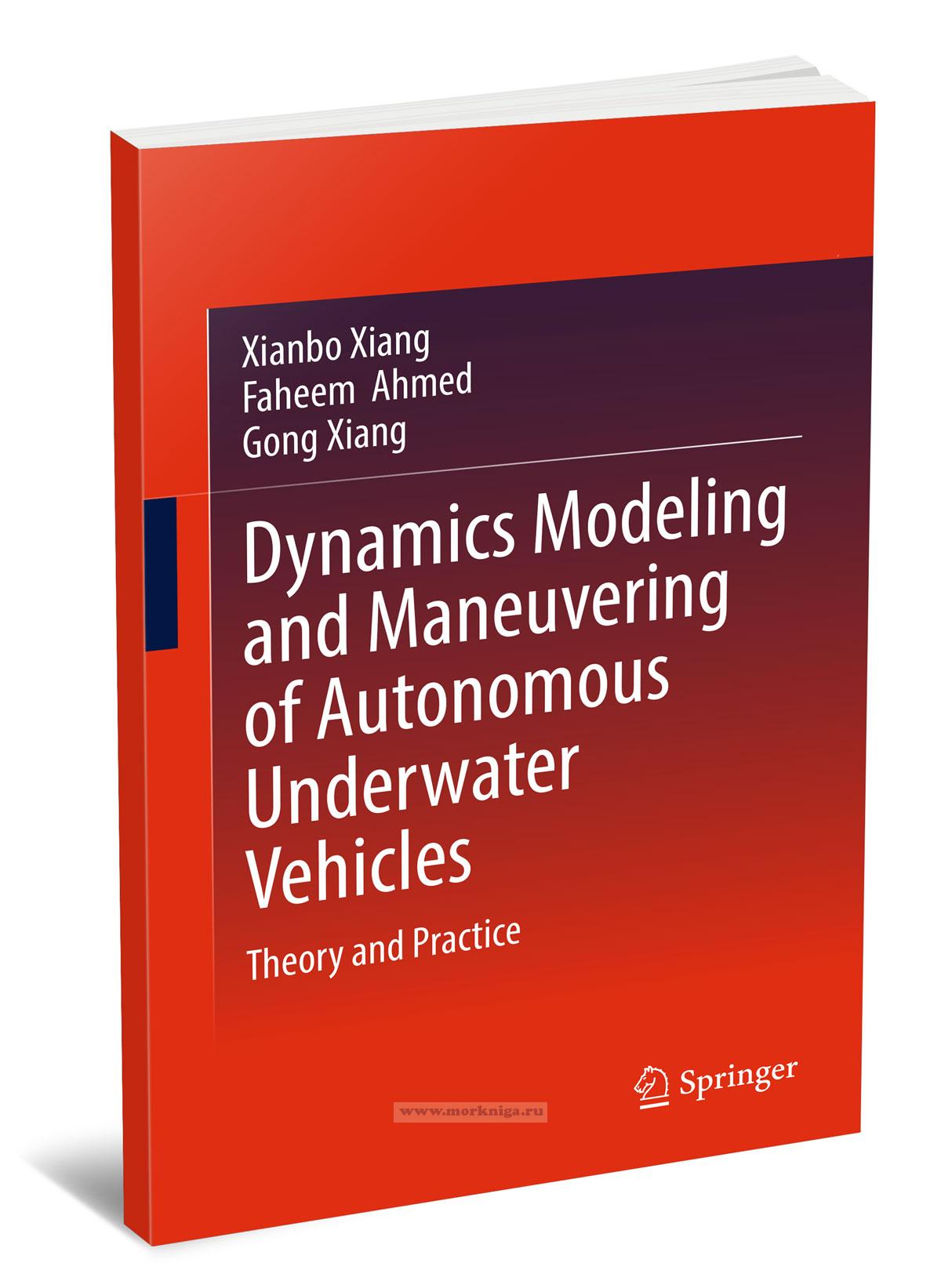
Dynamics Modeling and Maneuvering of Autonomous Underwater Vehicles/Моделирование динамики и маневрирования автономных подводных аппаратов
Артикул: 00-01124186
в желания В наличии
Автор: Xianbo Xiang, Faheem Ahmed, Gong Xiang
Издательство: Springer (все книги издательства)
ISBN: 978-981-95-1520-2
Год: 2026
Формат: А4 (210х297 мм)
Переплет: Мягкая обложка
Страниц: 170
Вес: 427 г
Издание на английском языке
This book is devoted to autonomous underwater vehicles and methods for assessing their dynamics and maneuverability. It examines AUV types, their design features, mathematical modeling of motion, hydrodynamic forces and coefficients, and methods for their analytical, semi-empirical, numerical, and experimental evaluation. Particular attention is paid to drag and lift calculations, hull and wing effects, thrust and propulsion modeling, CFD applications, parameter identification, on-water testing, and maneuver analysis. This publication is intended for specialists, engineers, and researchers involved in the design, modeling, and testing of autonomous underwater vehicles.
Content
1. Autonomous Underwater Vehicles
1.1. Introduction
1.2. From Classic-Myring AUVs to Latest Bio-Inspired AUVs
1.2.1. Classic-Myring (Torpedo-Shaped) AUVs
1.2.2. Complex-Shaped and Open-Frame AUVs
1.2.3. Bio-Inspired or Biomimetic AUVs
1.2.4. Latest Bio-Inspired and Hybrid-Shaped AUVs
1.2.5. AUVs for Submarine Cables and Pipeline Detections and Inspections
1.3. Merits and Demerits of AUV Designs
1.4. Summary
References
2. Principles of Autonomous Underwater Vehicle Dynamics
2.1. Fundamentals of AUV Dynamics
2.2. Degrees of Freedom and AUV Motion
2.2.1. 1 DOF Dynamics Modeling
2.2.2. 3 DOF Dynamics Modeling
2.2.3. Summary
2.3. Nonlinear Dynamics Modeling of AUV
2.3.1. Modeling Assumptions and Simplifications
2.3.2. Kinematics Modeling
2.3.3. Kinetics Modeling
2.4. Summary
References
3. Dynamics Modeling of Autonomous Underwater Vehicles
3.1. Derivation of 6-DOF Dynamics Equations of Motion
3.1.1. Rigid Body AUV Dynamics (JRB): Mathematical Derivation of 6-DOF Equations of Motion for AUV
3.2. Modeling Hydrodynamic Forces and Moments (Jhyd)
3.2.1. Modeling Added Mass (JA = MAv + CA(v)v)
3.2.2. Linear and Nonlinear Hydrodynamic Damping (D( v))
3.3. Hydrostatic Forces and Moments (Jhs)
3.4. Vector of Control Inputs (Jc)
3.5. Linear and Angular Accelerations: Combined Equations
3.6. Thrust and Propulsion Modeling
3.6.1. Propeller Thrust Force and Moment Coefficients
3.6.2. Propeller Thrust Mooring Test
3.6.3. Vehicle Thrust and Drag Relationship
3.7. Summary
References
4. Analytical and Semi-Empirical Methods for Hydrodynamic Coefficients Estimation
4.1. Introduction
4.2. Fundamental Theories for ASE-Based Estimations of Hydrodynamic Coefficients
4.2.1. Strip Theory
4.2.2. Potential Flow Theory
4.2.3. Slender Body Theory
4.3. Added Mass Coefficients
4.3.1. Axial Flow (Surge) Added Mass Coefficients
4.3.2. Cross Flow (Sway and Heave) Added Mass Coefficients
4.3.3. Rolling Added Mass Coefficients
4.3.4. Added Mass Cross-Terms
4.4. Drag Coefficients
4.4.1. Axial Drag Coefficient
4.4.2. Cross-Flow Drag Coefficients: Improved ASE Approach
4.4.3. Rolling Drag Coefficient
4.5. Lift Coefficients
4.5.1. Bare-Hull Lift Coefficients
4.5.2. Wings and Fins Lift Coefficients
4.5.3. Wing-Body Lift Interference: Insights from Slender Body Theory
4.5.4. Wing Body Lift Interference: Vorticity and Horseshoe Vortex Perspectives
4.5.5. Lift Coefficients with Interference Factors
4.5.6. Estimating Hydrodynamic Coefficients of FSAUV: A Practical Example
4.5.7. Estimating Lift Coefficients of FSAUV: A Practical Example
4.6. Summary
References
5. Computational Fluid Dynamics Based Estimation of Hydrodynamic Coefficients of AUVs
5.1. Introduction
5.1.1. Governing Equations
5.2. Drag Coefficients
5.2.1. Computational Fluid Domain and Boundary Conditions
5.2.2. Mesh Generation and Grid Convergence
5.2.3. ASE and CFD Results of Drag Coefficients: A Quantitative Analysis
5.3. Lift Coefficients and Wing-Body Lift Interference Effects
5.3.1. Quantitative Analysis of Wing-Body Interference Effects Using ASE and CFD Results
5.4. Summary
References
6. Experimental and Data-Driven Approaches for Hydrodynamic Coefficient Estimation
6.1. Introduction
6.1.1. Experimental Methods
6.1.2. Procedure for Determining Hydrodynamic Coefficients Following ITTC Guidelines
6.2. Data-Driven and System Identification Techniques
6.2.1. Parametric and Non-Parametric Dynamics Modeling
6.3. Summary
References
7. Maneuvering Performance Analysis and Evaluation
7.1. Introduction
7.2. Maneuvering Simulations and Experimental Validations
7.2.1. Interpreting Maneuvering Results and Error Metrics
7.2.2. Open Water Lake Trials of FSAUV: Free Running Experiments
7.2.3. REMUS 100 AUV Motion Simulations: Verification of ASE Methodology for Added Mass Coefficients
7.2.4. ASE Based FSAUV Dynamics and Experimental Validations
7.3. Improved ASE Method: Experimental Validation
7.3.1. Zigzag Pitching Maneuver-2
7.3.2. Zigzag Yawing Maneuver-2
7.3.3. Circle and Spiral Maneuvers
7.4. Wing-Body Lift Interference Effects on FSAUV Dynamics
7.4.1. WBI Effects on FSAUV Vertical Plane Dynamics
7.4.2. Zigzag Pitching Maneuvers-3: Experimental Validations
7.4.3. WBI Effects on FSAUV Horizontal Plane Dynamics
7.5. Summary
References
Отзывы покупателей (0)
У этого товара пока нет отзывов. Поделитесь впечатлением первым.