

Каталог▲▼
Advanced Welding Engineering and Technology for Marine Applications/Передовые технологии и методы сварки для применения в морской отрасли
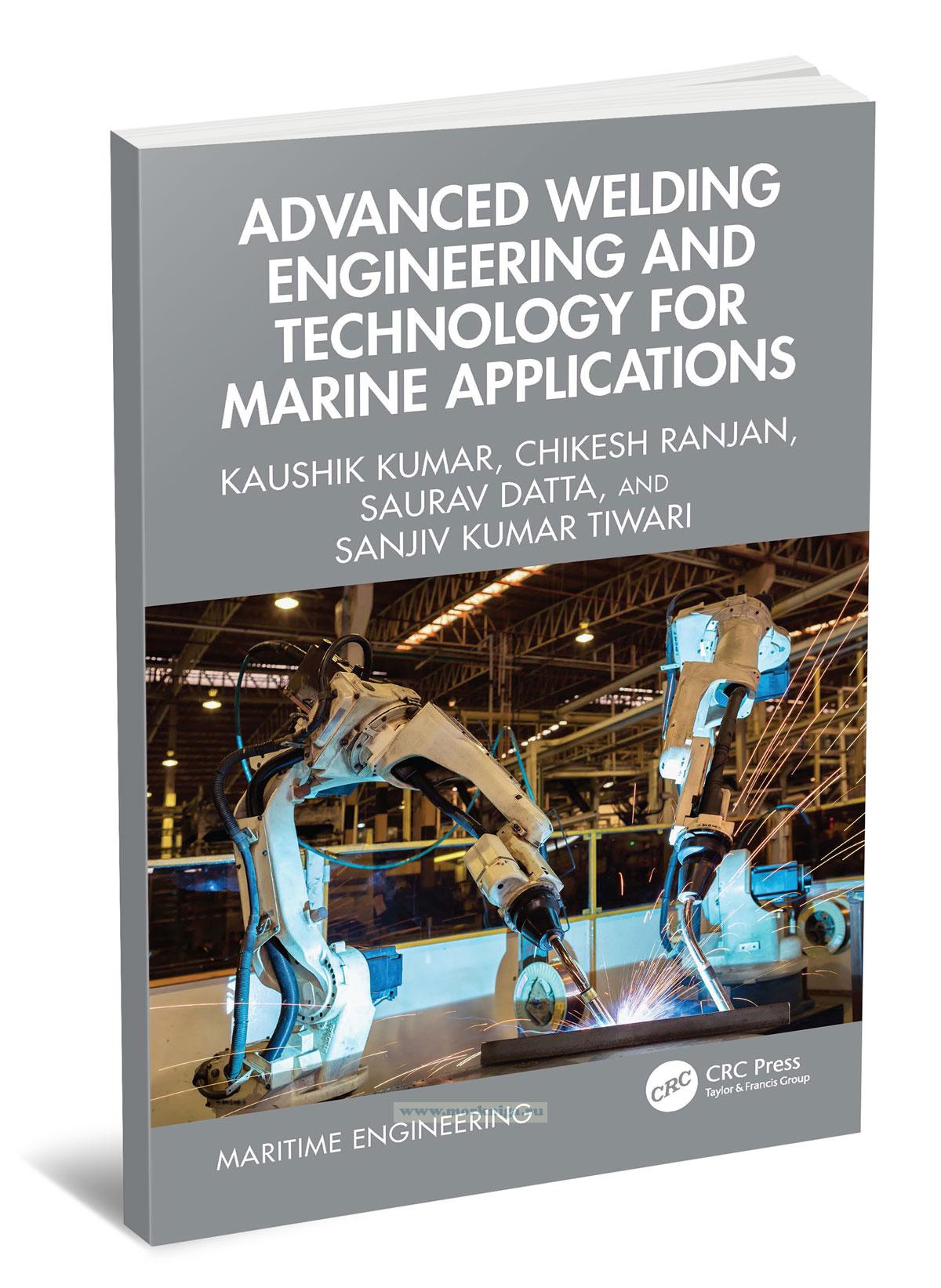
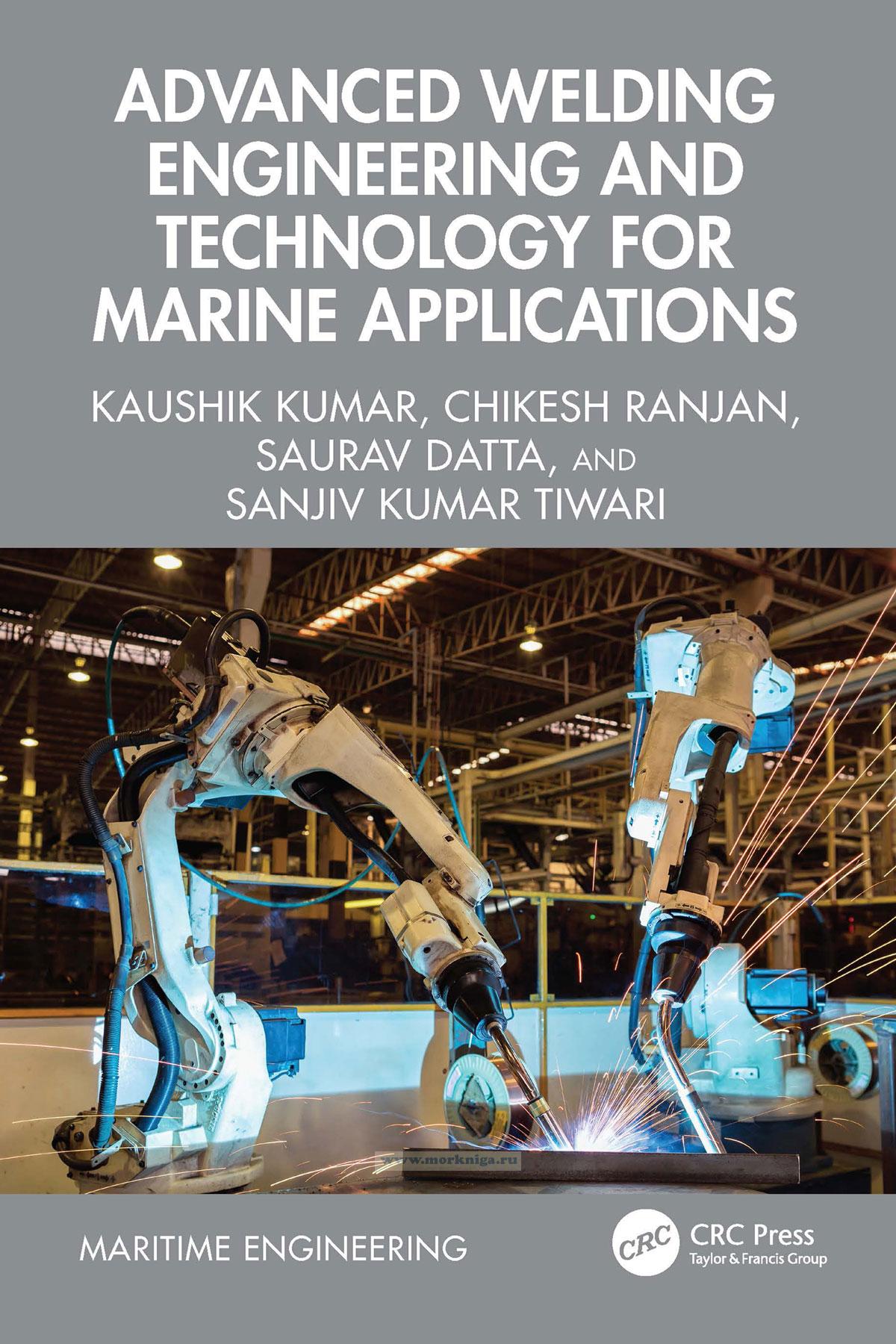
Артикул: 00-01124146
в желания В наличии
Автор: Kaushik Kumar, Chikesh Ranjan, Saurav Datta, and Sanjiv Kumar Tiwari
Издательство: CRC Press (все книги издательства)
Место издания: London and New York
ISBN: 978-1-032-10850-6
Год: 2026
Формат: А4 (210х297 мм)
Переплет: Мягкая обложка
Страниц: 317
Вес: 851 г
Издание на английском языке
This book is devoted to marine welding engineering and its application in shipbuilding, offshore facilities, and underwater structures. It covers materials for marine welding, key welding processes, metallurgical features, automation and robotics, hybrid technologies, additive manufacturing, quality control, non-destructive testing, international standards, corrosion, weld fatigue, environmental requirements, and promising areas for industry development. This publication is intended for students, engineers, and specialists involved in welding, shipbuilding, and the operation of offshore structures.
Content
Acknowledgments
Preface
Author Biographies
Chapter 1. Introduction to Marine Welding Engineering
1.1. Introduction
1.2. Overview of Marine Welding
1.3. Historical Development of Marine Welding
1.4. Role of Welding in Modern Marine Industries
1.5. Importance of Welding in Shipbuilding and Offshore Structures
1.6. Unique Challenges in Marine Welding
1.7. Future Trends and Innovations in Marine Welding
1.8. Summary
1.9. Review Questions
Chapter 2. Materials Used in Marine Welding
2.1. Introduction
2.2. Steel Alloys for Shipbuilding
2.3. Aluminum Alloys for Shipbuilding
2.4. Corrosion-Resistant Materials for Marine Application
2.5. Material Compatibility and Dissimilar Metal Welding
2.6. Summary
2.7. Review Questions
Chapter 3. Welding Processes in the Marine Industry
3.1. Introduction
3.2. Arc Welding Processes
3.3. Submerged Arc Welding (SAW)
3.4. Resistance Welding
3.5. Friction Stir Welding (FSW)
3.6. Process Comparison and Selection Guidelines
3.7. Summary
3.8. Review Questions
Chapter 4. Metallurgical Aspects of Marine Welding
4.1. Introduction
4.2. Heat-Affected Zone (HAZ) in Marine Alloys
4.3. Weldability of High-Strength Steels
4.4. Weldability of Corrosion-Resistant Alloys
4.5. Hydrogen-Induced Cracking (HIC)
4.6. Stress Corrosion Cracking (SCC) in Marine Welds
4.7. Metallurgical Testing and Evaluation
4.8. Summary
4.9. Review Questions
Chapter 5. Robotic and Automated Welding in Shipbuilding
5.1. Introduction
5.2. Role of Automation in Shipyard Welding
5.3. Types of Robotic Welding Systems in Shipbuilding
5.4. AI and Machine Learning in Welding Automation
5.5. Integration of Automation with Digital Shipbuilding
5.6. Challenges in Implementing Robotic Welding
5.7. Future Trends in Marine Welding Automation
5.8. Summary
5.9. Review Questions
Chapter 6. Hybrid Welding Technologies for Marine Applications
6.1. Introduction
6.2. Hybrid Laser-Arc Welding (HLAW)
6.3. Underwater Welding Techniques
6.4. Metallurgical Considerations in Hybrid and Underwater
6.5. Quality Assurance and Testing in Hybrid Marine
6.6. Future Trends in Hybrid Marine Welding
6.7. Summary
6.8. Review Questions
Chapter 7. Wire Arc Additive Manufacturing (WAAM) in Marine Applications
7.1. Introduction
7.2. Fundamentals of WAAM for Shipbuilding
7.3. WAAM Process Parameters and Material Considerations
7.4. Challenges of WAAM in the Marine Industry
7.5. Future Trends of WAAM in the Marine Industry
7.6. Case Study: Wire Arc Additive Manufacturing of SS308L Using CMT-Based Robotic Metal Inert Gas (MIG) Welding
7.7. Summary
7.8. Review Questions
Chapter 8. Welding for Offshore and Subsea Structures
8.1. Introduction
8.2. Challenges in Welding Offshore Rigs and Platforms
8.3. Welding Materials for Offshore Applications
8.4. Hyperbaric Welding
8.5. Deep-Sea Welding Techniques
8.6. Quality Control and Inspection in Offshore Welding
8.7. Future Trends in Offshore and Subsea Welding
8.8. Summary
8.9. Review Questions
Chapter 9. Non-Destructive Testing (NDT) for Marine Welds
9.1. Introduction
9.2. Overview of NDT Methods for Marine Applications
9.3. Ultrasonic Testing (UT)
9.4. Radiographic Testing (RT)
9.5. Magnetic Particle Testing (MT)
9.6. Other Relevant NDT Methods in Marine Welding
9.7. Inspection Techniques for Welded Marine Structures
9.8. Standards and Certification for Marine Weld NDT
9.9. Future Trends in Marine Weld Inspection
9.10. Summary
9.11. Review Questions
Chapter 10. Welding Standards and Regulations in the Marine Industry
10.1. Introduction
10.2. International Maritime Organization (IMO) Welding
10.3. ABS Welding Standards
10.4. Det Norske Veritas (DNV) Welding Standards
10.5. Lloyd's Register (LR) Welding Standards
10.6. Shipbuilding and Offshore Structural Welding Codes
10.7. Compliance and Quality Control in Marine Welding
10.8. Future Trends in Welding Standards
10.9. Summary
10.10. Review Questions
Chapter 11. Corrosion and Fatigue in Marine Welds
11.1. Introduction
11.2. Types of Corrosion in Marine Welds
11.3. Corrosion Prevention Techniques in Marine
11.4. Fatigue in Marine Welds
11.5. Fatigue Life Assessment of Welded Joints in Ships and Offshore Platforms
11.6. Testing and Monitoring of Corrosion and Fatigue
11.7. Standards and Guidelines for Corrosion and Fatigue
11.8. Future Trends in Corrosion and Fatigue Mitigation
11.9. Summary
11.10. Review Questions
Chapter 12. Sustainability and Environmental Considerations in Marine Welding
12.1. Introduction
12.2. Reducing Carbon Footprint in Shipyard Welding
12.3. Recycling and Eco-Friendly Welding Technologies
12.4. Waste Management in Marine Welding Operations
12.5. Health and Safety in Sustainable Welding Practices
12.6. Summary
12.7. Review Questions
Chapter 13. Future Trends in Marine Welding Engineering
13.1. Introduction
13.2. Digital Twin Technology in Marine Welding
13.3. Smart Sensors and Real-Time Monitoring in Marine
13.4. Artificial Intelligence and Machine Learning in Marine
13.5. Automation and Robotics in Next-Generation Marine
13.6. Sustainable and Low-Carbon Welding Innovations
13.7. Challenges in Adopting Future Welding Technologies
13.8. Outlook and Long-Term Trends
13.9. Summary
13.10. Review Questions
Bibliography
Index
Отзывы покупателей (0)
У этого товара пока нет отзывов. Поделитесь впечатлением первым.