

Каталог▲▼
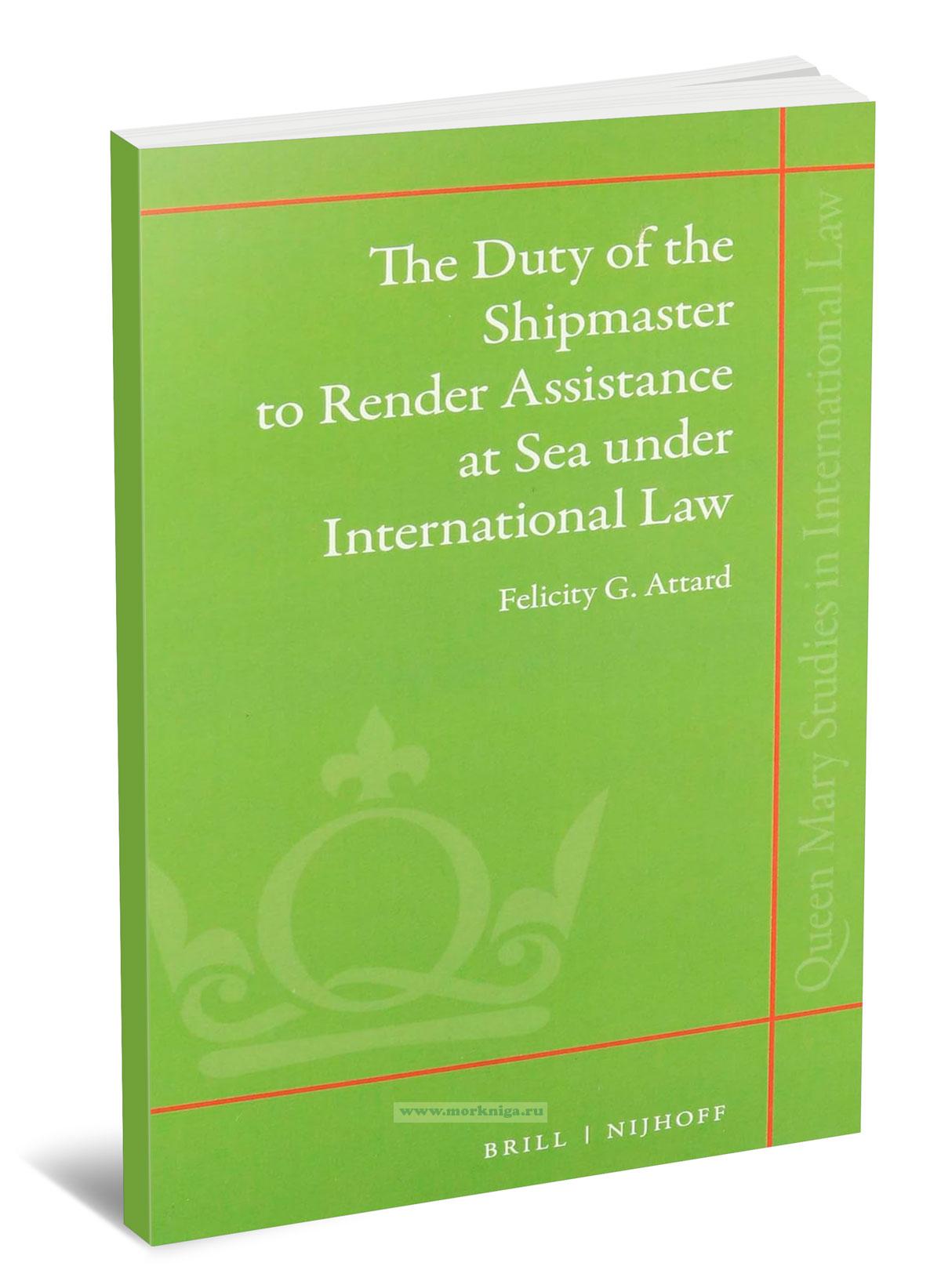
The Duty of the Shipmaster to Render Assistance at Sea under International Law/Обязанность капитана судна оказывать помощь в море согласно международному праву



Артикул: 00-01120851
в желания В наличии
Автор: Felicity G. Attard
Издательство: BRILL (все книги издательства)
Место издания: Boston
ISBN: 978-90-04-43547-6
Год: 2020
Переплет: Мягкая обложка
Страниц: 376
Вес: 939 г
Издание на английском языке
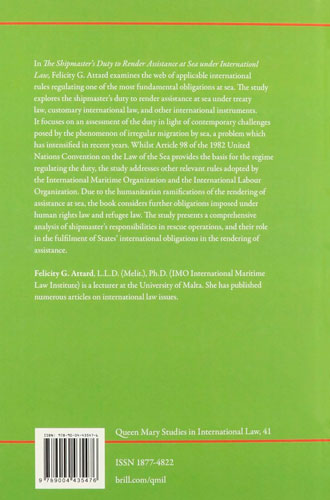
This book describes the legal and practical issues surrounding the duty of ships to provide assistance at sea, particularly in cases of irregular migration and rescue operations. It discusses the history of this obligation, its provisions in international law, and the recommendations of international organizations. It also examines human rights, migration legislation, and the responsibilities of states and shipmasters during rescue operations. This book is intended for lawyers, maritime specialists, and anyone interested in international maritime law and humanitarian action at sea.
Content
Foreword
Preface
Acknowledgements
Abbreviations
Table of Cases
Table of Treaties
Table of Legislation
Table of Selected Instruments
General Introduction
1. The Shipmaster's Duty to Render Assistance at Sea: Challenges and Considerations Posed by Irregular Migration by Sea
1.1. Introduction
1.2. The Shipmaster's Duty to Render Assistance at Sea in Irregular Migrant Rescue Operations
1.3. Safety, Seaworthiness, and Security Challenges
1.4. Commercial Challenges
1.5. Human Rights and Refugee Rights Considerations
1.6. Conclusion
2. Historic Development of the Duty to Render Assistance at Sea
2.1. Introduction
2.2. The Genesis of the Duty to Render Assistance at Sea
2.3. Early International Efforts to Regulate the Duty to Render Assistance at Sea
2.3.1. The 1910 Salvage Convention
2.3.2. The 1910 Collisions Convention
2.3.3. The 1914 Solas
2.4. Conclusion
3. The Duty to Render Assistance at Sea under International Law
3.1. Introduction
3.2. The Duty to Render Assistance at Sea under Treaty Law
3.2.1. The Duty to Render Assistance at Sea under the HSC
3.2.1.1. The HSC: Introduction
3.2.1.2. The Duty to Render Assistance at Sea under the ilc Provisional Articles on the High Seas
3.2.1.3. The Duty to Render Assistance at Sea: unclos I Deliberations and the HSC
3.2.2. The Duty to Render Assistance at Sea under unclos
3.2.2.1. The Development of unclos
3.2.2.2. The Duty to Render Assistance at Sea: unclos III Deliberations
3.2.2.3. The Duty to Render Assistance at Sea under unclos Articles 18(2) and 98
3.2.3. The Duty to Render Assistance at Sea under IMO Treaties
3.2.3.1. The 1974 Solas
3.2.3.2. The 1979 SAR
3.2.3.3. The 2004 Amendments to the 1974 Solas and the 1979 SAR
3.2.3.4. The 1989 Salvage Convention
3.3. The Duty to Render Assistance at Sea under Customary International Law
3.3.1. The Role of Treaties in the Creation of Customary International Law Regulating the Duty to Render Assistance at Sea
3.3.2. State Measures to Enforce the Duty to Render Assistance at Sea in State Practice
3.4. The Duty to Render Assistance at Sea under Soft Law
3.4.1. IMO and ICS Guidelines
3.4.1.1. Cooperation and Communication
3.4.1.2. Level of Preparedness
3.4.1.3. Actions to Be Implemented during and after the Embarkation of Rescued Persons
3.4.1.4. Disembarkation of Rescued Persons to a Place of Safety
3.4.1.5. Respect for the Human Rights and Refugee Rights of Rescued Persons
3.5. Conclusion
4. State Measures Relating to the Duty of the Shipmaster to Render Assistance under the Law of the Sea
4.1. Introduction
4.2. State Measures Relating to the Duty of the Shipmaster to Render Assistance at Sea under Treaty Law
4.2.1. Flag State Jurisdiction
4.2.1.1. Safety and Seaworthiness
4.2.1.2. Crew
4.2.1.3. Security
4.2.2. Coastal State Jurisdiction
4.2.2.1. Internal Waters
4.2.2.2. Territorial Sea
4.2.2.3. Contiguous Zone
4.3. State Measures Relating to the Duty of the Shipmaster to Render Assistance at Sea under Customary International Law
4.3.1. Customary International Law Rules Relating to the Shipmaster's Duty to Render Assistance Reflected in Treaty Law
4.3.2. Customary International Law Rules Relating to the Shipmaster's Duty to Render Assistance at Sea Not Found in Treaty Law
4.4. Conclusion
5. State Measures Relating to the Duty of the Shipmaster to Render Assistance at Sea under Human Rights Law and Refugee Law
5.1. Introduction
5.2. State Measures Relating to the Duty of the Shipmaster to Render Assistance at Sea under Human Rights Law
5.2.1. The Interaction between the Law of the Sea and Human Rights Law
5.2.2. The Jurisdictional Basis for the Application of Human Rights Law at Sea
5.2.2.1. De Jure Jurisdiction
5.2.2.2. De Facto Jurisdiction
5.2.2.3. De Facto and De Jure Jurisdiction in Rescue at Sea Operations
5.2.3. State Duties to Protect Human Rights at Sea
5.2.3.1. Right to Life
5.2.3.2. Prohibition of Torture and Inhuman and Degrading Treatment or Punishment
5.3. State Measures Relating to the Duty of the Shipmaster to Render Assistance at Sea under Refugee Law
5.3.1. The Extraterritorial Application of Non-refoulement
5.3.2. Place of Safety and Respect for Non-refoulement
5.3.3. Processing of Asylum Claims
5.4. Conclusion
6. State Responsibility and the Duty of the Shipmaster to Render Assistance at Sea
6.1. Introduction
6.2. Doctrine of State Responsibility under International Law
6.3. Attribution of State Responsibility under International Law
6.3.1. General Principles to Gauge Attribution
6.3.2. Conduct of Private Persons Attributable to the State
6.3.3. Due Diligence and the Attribution of State Responsibility
6.3.3.1. An Obligation of Conduct, Not of Result
6.3.3.2. Reasonable Measures
6.3.3.3. Relativeness
6.3.3.4. The Exercise of Due Diligence Obligation and Violations of International Obligations by Private Persons
6.4. State Responsibility and the Shipmaster in Rescue at Sea Operations
6.4.1. Flag State Responsibility and the Shipmaster in Rescue at Sea Operations
6.4.1.1. Obligations under the Law of the Sea
6.4.1.2. Obligations under Human Rights Law and Refugee Law
6.4.1.3. Case Studies
6.4.2. Coastal or SAR State Responsibility and the Shipmaster in Rescue at Sea Operations
6.4.2.1. Obligations under the Law of the Sea
6.4.2.2. Obligations under Human Rights Law and Refugee Law
6.4.2.3. Case Studies
6.5. Conclusion
General Conclusions
Bibliography
Index
Отзывы покупателей (0)
У этого товара пока нет отзывов. Поделитесь впечатлением первым.