

Каталог▲▼
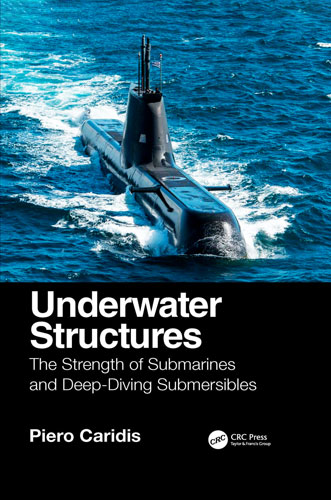
Underwater Structures. The Strength of Submarines and Deep-Diving Submersibles/Подводные конструкции. Прочность подводных лодок и глубоководных аппаратов


Артикул: 00-01113276
в желания В наличии
Автор: Piero Caridis
Издательство: CRC Press (все книги издательства)
Место издания: London and New York
ISBN: 978-1-032-78716-9
Год: 2025
Формат: А4 (210х297 мм)
Переплет: Твердая обложка
Страниц: 500
Вес: 1457 г
Издание на английском языке
The book is a guide to the analysis and design of underwater hulls, including theory, materials, and methods. It covers the design of cylindrical shells, spheres, cones, and multi-segment hulls, their stability, and collapse. It covers materials, design rules, marine environment effects, and numerical modeling methods. The book is useful for engineers, researchers, and students involved in the design of safe underwater structures.
Content
Preface
Acknowledgements
Author
Chapter 1. Evolution and Present-Day Types of Underwater Vehicles
1.1. Introduction
1.2. Challenges Facing the Structure of Underwater Vehicles
1.2.1. Hydrostatic Pressure
1.2.2. Temperature
1.2.3. Acoustics
1.2.4. Survivability and Vulnerability
1.2.5. Effects of the Environment on Material Performance: Corrosion and Fatigue
1.3. The Evolution of Underwater Vehicles
1.3.1. Early Forms of Subsea Equipment: From the Diving Bell to the Modern Submersible
1.3.2. Deep Diving Records
1.3.3. The Evolution of Submarines until the End of the 19th Century
1.4. Description and Classification of Underwater Vehicles: Submarine Types
1.4.1. Uses of Submersibles
1.4.2. Classification of Submersibles
1.4.3. Manned Submersibles
1.4.4. Unmanned Submersibles (Underwater Vehicles)
Notes
References
Chapter 2. Materials for Submarines and Deep-Diving Submersibles
2.1. General
2.2. Materials for Submarines and Deep-Diving Submersibles
2.2.1. Titanium in Submarine Structures
2.2.2. Steels Developed for Submarine Pressure Hulls
2.2.3. Welding of High-Strength Steels
2.3. Composite Materials
2.3.1. Fibre-Reinforced Polymers: Composition and Properties
2.3.2. Reinforcing Fibres
2.3.3. The Use of Polymers as a Matrix in a Composite Material
2.3.4. Uses of Composites in Submarines
2.4. Uses of Glass and Acrylic in Underwater Vehicles
2.4.1. Glass
2.4.2. Acrylic (Polymethyl Methacrylate)
Notes
References
Chapter 3. Cylindrical Shells under External Pressure
3.1. Introduction
3.1.1. A General Description of Submarine Structures
3.1.2. Load Transfer in Submarine Pressure Hull Structures
3.1.3. Some Observations on the Behaviour of Elements of Curved Structures
3.2. The Pressure Hull of Underwater Vehicles as a Composite Shell of Revolution
3.2.1. Geometrical Properties of Shells
3.2.2. Shells of Revolution: Geometry
3.2.3. Stresses in Thin Shells: The Membrane Theory of Thin Shells
3.2.4. Membrane Theory of SOR Subjected to Rotationally Symmetric Loading
3.2.5. Bending Theory of SOR Subjected to Rotationally Symmetric Loading
3.3. Elastic Stability of Unstiffened Cylindrical Shells
3.3.1. Introduction
3.3.2. Kinematic Relations for Membrane and Bending Behaviour of Cylindrical Shells
3.3.3. Infinitely Long Cylindrical Shell Subjected to Arbitrary External Loading
3.3.4. Finite-Length Cylindrical Shell Subjected to Constant Hydrostatic Pressure
3.3.5. Elastic Buckling Pressure of a Long Cylindrical Shell
3.3.6. Pressure Vessels Subjected to Internal Pressure
Notes
References
Chapter 4. Interframe Strength of Ring-Stiffened Cylindrical Shells
4.1. Imperfection-Free Cylindrical Shell with Internal Ring Frames
4.1.1. The Effect of Ring Frames on the Axial Stresses in the Cylindrical Shell
4.1.2. Infinitely Long Ring-Stiffened Cylindrical Shell
4.1.3. Infinitely Long Ring-Stiffened Cylindrical Shell Including Shell Bending Effects
4.1.4. Infinitely Long Stiffened Cylindrical Shell Including Axial Compression
4.1.5. Infinitely Long Stiffened Cylindrical Shell Including Axial Compression (Approximate Solution)
4.2. Ring-Stiffened Cylindrical Shells with Initial Distortions
4.2.1. Sources of Initial Distortions in the Cylindrical Shell
4.2.2. Measurement of Initial Distortions
4.3. Analysis of Ring-stiffened Cylindrical Shells with Initial Distortions
4.3.1. Derivation of the Differential Equation
4.3.2. Solution of the Differential Equation
Notes
References
Chapter 5. General Instability of Ring-Stiffened Cylindrical Shells
5.1. Introduction
5.2. Application of the Strain Energy Method
5.2.1. Cylindrical Shell and Ring Frame Treated Separately
5.2.2. Ring-Stiffened Cylindrical Shell
5.3. Application of the Ritz Method
5.3.1. Strain Energy of a Linear Elastic Body
5.3.2. Membrane Strain Energy of Cylindrical Shell to First-Order Accuracy
5.3.3. Bending Strain Energy of Cylindrical Shell to First-Order Accuracy
5.3.4. Membrane and Bending Strain Energy of Shell Plating to Second-Order Accuracy
5.3.5. Membrane and Bending Strain Energy of a Ring Frame
5.3.6. Potential of the Work Done
5.3.7. Determination of Ritz Constants
5.4. Graphical Presentation of the Bryant and Kendrick Solutions
5.5. Ring-Stiffened Cylindrical Shells with Initial Distortions
5.5.1. Normal Strains in Cylindrical Shell Allowing for Initial Out-of-Circularity
5.5.2. Strain Energy of Cylindrical Shell and Ring Frames
5.5.3. Potential of the Work Done
5.5.4. The Total Potential
5.5.5. Bending Stresses Due to the Presence of Initial Distortions
5.6. Concluding Remarks
Notes
References
Chapter 6. Collapse of Ring-Stiffened Cylindrical Shells
6.1. Failure Modes of a Submarine Pressure Hull
6.2. Interframe Collapse and General Instability Collapse
6.2.1. Interframe Collapse
6.2.2. Approximate Solution for Interframe Collapse
6.2.3. General Instability Collapse
6.3. Internal versus External Ring Frames
6.3.1. Interframe Strength
6.3.2. Overall Elastic Buckling Strength
6.3.3. The Effect of Ring Frame Eccentricity
6.3.4. Fabrication Issues
6.4. Collapse Modes of Internal Ring Frames
6.4.1. Ring Frame Flexural-Torsional Buckling
6.4.2. Ring Frame Yielding
6.5. General Instability of Cylinders Fitted with Intermediate Heavy Frames
6.6. Initial Distortions and Their Effect on Bending Stresses
6.6.1. Out-Of-Circularity of Unstiffened Cylindrical Shells
6.6.2. Out-Of-Circularity of Stiffened Cylindrical Shells
6.6.3. Initial Tilt of Ring Frames
6.7. Residual Stresses and Their Effect on Local Stresses
6.7.1. Cold-Bending Residual Stresses in the Cylindrical Shell
6.7.2. Cold-Bending Residual Stresses in Ring Frames
6.7.3. Welding Residual Stresses in Cylindrical Shell and Ring Frames
6.8. Submarine Accidents
Notes
References
Chapter 7. Truncated Cones and Major Internal Structures
7.1. Truncated Cones in Submarine Pressure Hulls
7.1.1. Loading of Cones
7.1.2. Membrane Theory of Conical Shells
7.2. Equations of Equilibrium of Conical Shells
7.2.1. The Dubois Equation
7.2.2. Approximate Solutions for Edge Bending Response of Conical Shells
7.2.3. The Taylor-Wenk Solution for Conical Shells
7.2.4. The Wenk and Taylor Approximate Solution
7.2.5. The Geckeler Approximation for Conical Shells
7.3. Tests on Truncated Conical Sections
7.3.1. Effect of Stiffeners at Cone-Cylinder Junctions
7.3.2. Effect of Cone Angle and Presence of Stiffeners at Cone-Cylinder Junctions
7.3.3. Elasto-Plastic Failure of Unstiffened Cones under Uniaxial Loading
7.3.4. Elasto-Plastic Failure of Unstiffened Cones under Combined Loading
7.3.5. Collapse Strength Prediction of Ring-Stiffened Cones Using FEA
7.4. Design of Ring-Stiffened Conical Sections
7.4.1. Use of Rules and Codes
7.4.2. Interaction Equation for the Ultimate Strength of Ring-Stiffened Cones
7.5. Bulkheads
7.5.1. The Different Roles of Submarine Bulkheads
7.5.2. Types of Bulkheads and Structural Types
7.5.3. Stiffening System and Supporting Structure
7.5.4. Design Philosophy for Submarine Bulkheads
7.5.5. Design Loads
7.6. Decks and Tanks
Note
References
Chapter 8. Finite Element Analysis of Submarine Pressure Hulls
8.1. Numerical Procedures for Underwater Structures
8.2. Nonlinear Analysis of Underwater Structures
8.3. The Newton-Raphson Method in Nonlinear Finite Element Analysis
8.4. The Arc-Length Method
8.5. Submarine Pressure Hull Analysis
8.6. Determination of Collapse Pressure Using Finite Element Analysis
8.7. Effect of Shell Thickness, Initial Imperfections, and Heat Treatment on Cylindrical Pressure Hull Collapse Strength
8.8. Effect of Internal Structure on Pressure Hull Strength
8.8.1. Finite Element Modelling
8.8.2. Analysis of Results (Overall and Interframe Buckling, Stresses, and Collapse Loads)
8.9. Buckling of Cylindrical Pressure Hulls with Openings
8.9.1. Finite Element Analysis of the Scale Model
8.10. Ensuring Accuracy and Reliability of Numerical Analysis Results
8.11. Model Building. Verification and Validation
8.12. Verification of Software Used for Submarine Pressure Hull Collapse
8.12.1. Code Verification
8.12.2. Calculation Verification
Notes
References
Chapter 9. Design of Submarine Pressure Hulls
9.1. Operational Requirements
9.2. Pressure Hull Form
9.2.1. Main Hull
9.2.2. Single or Double Hull Submarine?
9.2.3. Pressure Hull Stiffening, Connections, and End Closures
9.3. Design
9.3.1. Design Philosophy and Criteria
9.3.2. Design of Ring-Stiffened Cylindrical Shell
9.4. Use of Numerical Procedures in Pressure Hull Design
9.4.1. Submarine Design Formulas and Numerical Methods
9.4.2. Determination of Partial Safety Factor for Uncertainty in Predictive Model
9.4.3. Methods to Obtain a PSF from the Bias and the COV
9.5. Use of Standards and Classification Society Rules in Pressure Hull Design
9.5.1. Accuracy of Design Curves for Interframe Collapse: The UK Standard
9.5.2. Comparison Study of Classification Society Rules
Notes
References
Chapter 10. Corrosion and Fatigue in Submarine Structures
10.1. Introduction
10.2. Corrosion
10.2.1. Electrochemical Corrosion
10.2.2 .Corrosion in Submarine Structures
10.2.3 .Inspection and Repair of Submarine Structures for Corrosion
10.2.4 .The Use of Numerical Tools to Predict Pressure Hull Strength
10.2.5 .Pressure Hull Corrosion Rates
10.2.6. Tests and Strength Predictions for Intact and Corroded Ring-Stiffened Cylinders
10.2.7 .Comparison with Analytical Design Formulas
10.2.8 .The Influence of Out-of-Circularity on Collapse Strength of a Pressure Hull with Corrosion
10.3. Fatigue Loading of Submarine Structures
10.3.1. Environment
10.3.2. Operating Profile and Load Sequence
10.3.3. Hull Form
10.3.4. Materials
10.3.5. Fabrication Methods
10.3.6 .Fatigue Life Prediction
10.3.7. Fatigue Testing of Submarine Structures
Notes
References
Chapter 11. Structural Analysis of Deep-Diving Submersibles
11.1. Spheres and Spherical Caps
11.1.1. Yield Strength of Spherical Shells
11.1.2. Classical Elastic Buckling Pressure of a Perfect Sphere
11.1.3 .Buckled Form and Collapse Pressure
11.1.4. Inelastic Buckling of Spherical Shells
11.1.5 .Tests on Spherical Shells
11.2. Barrelled Shells
11.2.1. Geometry of Barrelled Shells
11.2.2 .Failure Modes of Barrelled Shells Subjected to External Pressure
11.3. Multisegment Pressure Hulls
11.3.1. Multisphere Pressure Hull
11.3.2. Tests on Multisphere Pressure Hulls
11.3.3. Multi-Barrelled Pressure Hulls
Notes
References
Chapter 12. Structural Design of Deep-Diving Submersibles
12.1. Design Issues Concerning Deep-Diving Submersibles
12.2. Structural Design of Submersible Pressure Hulls
12.2.1 .Pressure Hull Form: The Weight-to-Displacement Ratio as a Measure of Merit
12.2.2. Potential Hull Forms of Deep-Diving Rescue and Search Vehicles
12.3. Design of Spherical Shells for Deep-Diving Submersibles
12.3.1. A Design Procedure for Imperfect Spherical Shells
12.3.2. Alternative Definitions of Geometric Imperfections in Spherical Shells
12.3.3 .Benchmark Study of PD5500 Design Code
12.3.4. Effect of Imperfection Type on Spherical Shell Response
12.3.5. Structural Design of Acrylic Spherical Pressure Hulls
12.4. Design of Barrelled Shells
12.4.1 .Definition of Geometry
12.4.2. Barrels of Constant Mass
12.4.3. Barrels of Constant Volume
12.5. Design of Multisphere Pressure Hulls
12.5.1. A Brief Literature Review
12.5.2. Design of Intersection Rings in Multisphere Pressure Hulls
12.6. Brief Comments on the Design of Cylindrical Shells Using Composites
12.7. Optimum Structural Design of Underwater Vehicles and Their Components
12.7.1. Ring-Stiffened Cylinders and Multisphere Pressure Hulls
12.7.2. Barrelled Shells
12.7.3. Optimum Design of Torispheres
Notes
References
Appendix 1: Manned Submersibles
Appendix 2: Coefficients for Elastic Buckling of Ring-Stiffened Cylindrical Shells with Initial Distortions
Appendix 3: Bessel and Kelvin Functions
Appendix 4: Design Equations for Ultimate Strength of Ring-Stiffened Cylindrical Shells and Cones
Appendix 5: DTMB Test Specimen Particulars for Spherical Shells
Appendix 6: Weight-to-Displacement Ratios (W/Д) for Rescue and Search Deep-Diving Submersibles
Appendix 7: European Standard EN 1993-1-6 (Selected Extracts)
Appendix 8: Design of Spherical Shells According to ASME PHVO-1-2007
Appendix 9: Abbreviations and Acronyms
Index
Отзывы покупателей (0)
У этого товара пока нет отзывов. Поделитесь впечатлением первым.