

Каталог▲▼
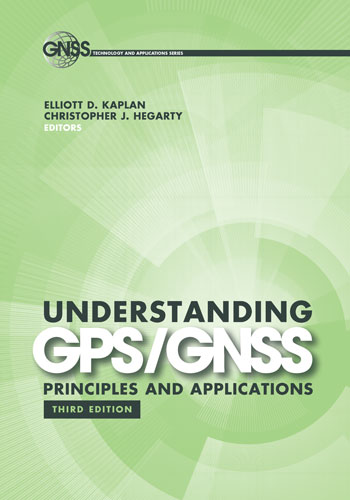
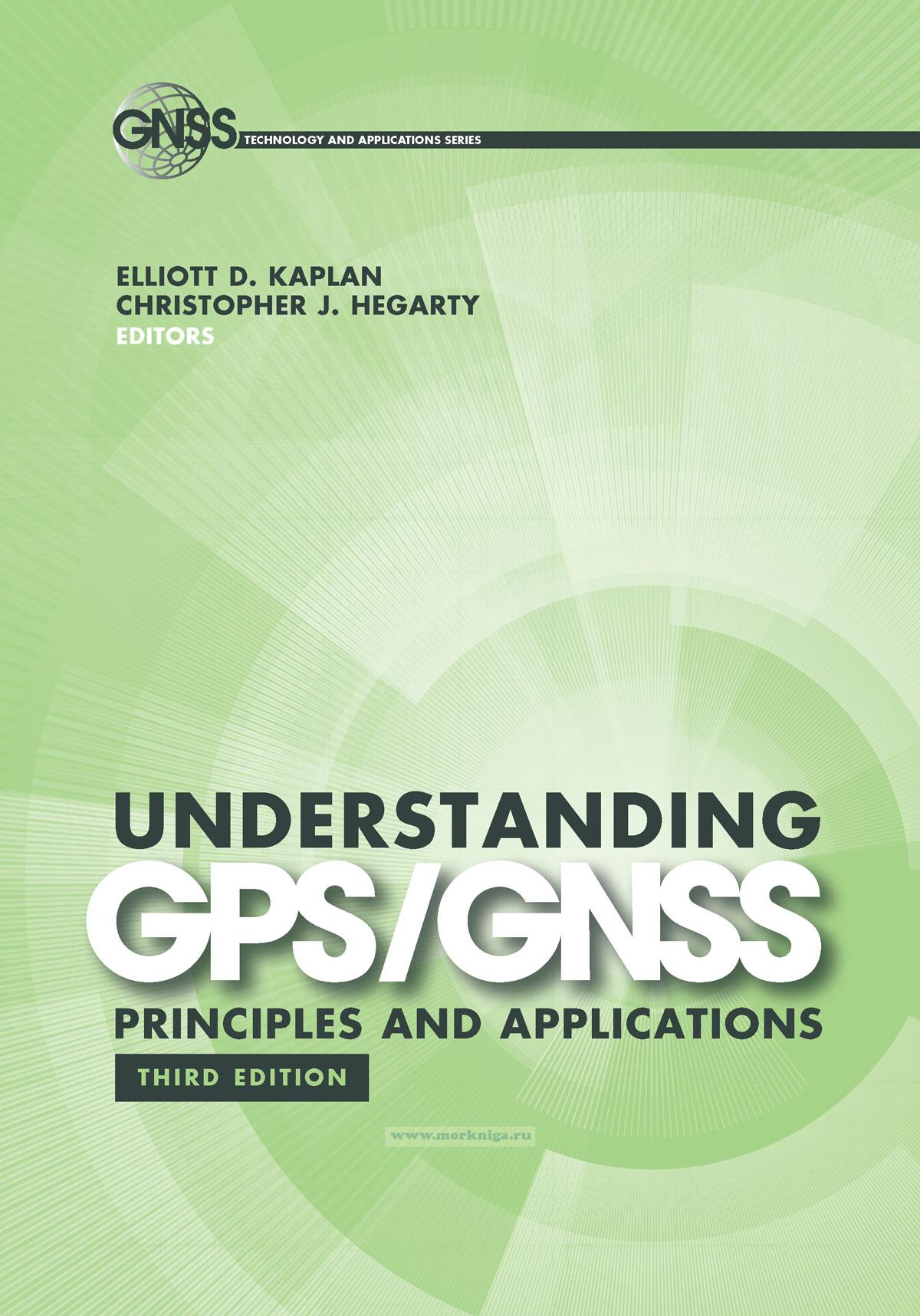
Understanding GPS/GNSS Principles and Applications/Понимание принципов и приложений GPS/GNSS

Артикул: 00-01112669
в желания В наличии
Автор: Elliott D. Kaplan, Christopher J. Hegarty
Издательство: Artech House (все книги издательства)
Место издания: Boston
ISBN: 978-1-63081-058-0
Год: 2017
Формат: А4 (210х297 мм)
Переплет: Твердая обложка
Страниц: 1017
Вес: 2684 г
Издание на английском языке
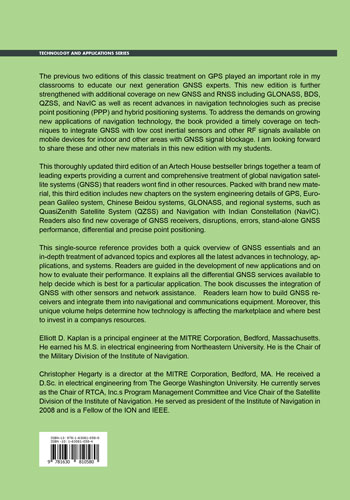
The book is a guide to global navigation satellite systems (GNSS). It covers the operating principles of GPS, GLONASS, Galileo and BeiDou, the features of signals, receivers and errors that affect accuracy. It also covers methods for improving accuracy, integration with other systems and modern development trends. The book is intended for specialists, engineers, students and anyone interested in satellite navigation.
Contents
Preface to the Third Edition
Third Edition Acknowledgments
Introduction
1.1. Introduction
1.2. GNSS Overview
1.3. Global Positioning System
1.4. Russian Glonass System
1.5. Galileo Satellite System
1.6. Chinese BeiDou System
1.7. Regional Systems
1.7.1. Quasi-Zenith Satellite System (QZSS)
1.7.2. Navigation with Indian Constellation (NavIC)
1.8. Augmentations
1.9. Markets and Applications
1.10. Organization of the Book
References
Fundamentals of Satellite Navigation
2.1. Concept of Ranging Using Time-of-Arrival Measurements
2.1.1. Two-Dimensional Position Determination
2.1.2. Principle of Position Determination via Satellite-Generated
Ranging Codes
2.2. Reference Coordinate Systems
2.2.1. Earth-Centered Inertial (ECI) Coordinate System
2.2.2. Earth-Centered Earth-Fixed (ECEF) Coordinate System
2.2.3. Local Tangent Plane (Local Level) Coordinate Systems
2.2.4. Local Body Frame Coordinate Systems
2.2.5. Geodetic (Ellipsoidal) Coordinates
2.2.6. Height Coordinates and the Geoid
2.2.7. International Terrestrial Reference Frame (ITRF)
2.3. Fundamentals of Satellite Orbits
2.3.1. Orbital Mechanics
2.3.2. Constellation Design
2.4. GNSS Signals
2.4.1. Radio Frequency Carrier
2.4.2. Modulation
2.4.3. Secondary Codes
2.4.4. Multiplexing Techniques
2.4.5. Signal Models and Characteristics
2.5. Positioning Determination Using Ranging Codes
2.5.1. Determining Satellite-to-User Range
2.5.2. Calculation of User Position
2.6. Obtaining User Velocity
2.7. Frequency Sources, Time, and GNSS
2.7.1. Frequency Sources
2.7.2. Time and GNSS
References
Global Positioning System
3.1. Overview
3.1.1. Space Segment Overview
3.1.2. Control Segment Overview
3.1.3. User Segment Overview
3.2. Space Segment Description
3.2.1. GPS Satellite Constellation Description
3.2.2. Constellation Design Guidelines
3.2.3. Space Segment Phased Development
3.3. Control Segment Description
3.3.1. OCS Current Configuration
3.3.2. OCS Transition
3.3.3. OCS Planned Upgrades
3.4. User Segment
3.4.1. GNSS Receiver Characteristics
3.5. GPS Geodesy and Time Scale
3.5.1. Geodesy
3.5.2. Time Systems
3.6. Services
3.6.1. SPS Performance Standard
3.6.2. PPS Performance Standard
3.7. GPS Signals
3.7.1. Legacy Signals
3.7.2. Modernized Signals
3.7.3. Civil Navigation (CNAV) and CNAV-2 Navigation Data
3.8. GPS Ephemeris Parameters and Satellite Position Computation
3.8.1. Legacy Ephemeris Parameters
3.8.2. CNAV and CNAV-2 Ephemeris Parameters
References
Glonass
4.1. Introduction
4.2. Space Segment
4.2.1. Constellation
4.2.2. Spacecraft
4.3. Ground Segment
4.3.1. System Control Center (SCC)
4.3.2. Central Synchronizer (CS)
4.3.3. Telemetry, Tracking, and Command (TT&C)
4.3.4. Laser Ranging Stations (SLR)
4.4. GLONASS User Equipment
4.5. Geodesy and Time Systems
4.5.1. Geodetic Reference System
4.5.2. GLONASS Time
4.6. Navigation Services
4.7. Navigation Signals
4.7.1. FDMA Navigation Signals
4.7.2. Frequencies
4.7.3. Modulation
4.7.4. Code Properties
4.7.5. GLONASS P-Code
4.7.6. Navigation Message
4.7.7. C/A Navigation Message
4.7.8. P-Code Navigation Message
4.7.9. CDMA Navigation Signals
Acknowledgments
References
Galileo
5.1. Program Overview and Objectives
5.2. Galileo Implementation
5.3. Galileo Services
5.3.1. Galileo Open Service
5.3.2. Public Regulated Service
5.3.3. Commercial Service
5.3.4. Search and Rescue Service
5.3.5. Safety of Life
5.4. System Overview
5.4.1. Ground Mission Segment
5.4.2. Ground Control Segment
5.4.3. Space Segment
5.4.4. Launchers
5.5. Galileo Signal Characteristics
5.5.1. Galileo Spreading Codes and Sequences
5.5.2. Navigation Message Structure
5.5.3. Forward Error Correction Coding and Block Interleaving
5.6. Interoperability
5.6.1. Galileo Terrestrial Reference Frame
5.6.2. Time Reference Frame
5.7. Galileo Search and Rescue Mission
5.7.1. SAR/Galileo Service Description
5.7.2. European SAR/Galileo Coverage and MEOSAR Context
5.7.3. Overall SAR/Galileo System Architecture
5.7.4. SAR Frequency Plan
5.8. Galileo System Performance
5.8.1. Timing Performance
5.8.2. Ranging Performance
5.8.3. Positioning Performance
5.8.4. Final Operation Capability Expected Performances
5.9. System Deployment Completion up to FOC
5.10. Galileo Evolution Beyond FOC
References
BeiDou Navigation Satellite System (BDS)
6.1. Overview
6.1.1. Introduction to BDS
6.1.2. BDS Evolution
6.1.3. BDS Characteristics
6.2. BDS Space Segment
6.2.1. BDS Constellation
6.2.2. BDS Satellites
6.3. BDS Control Segment
6.3.1. Configuration of the BDS Control Segment
6.3.2. Operation of the BDS Control Segment
6.4. Geodesy and Time Systems
6.4.1. BDS Coordinate System
6.4.2. BDS Time System
6.5. The BDS Services
6.5.1. BDS Service Types
6.5.2. BDS RDSS Service
6.5.3. BDS RNSS Service
6.5.4. BDS SBAS Service
6.6. BDS Signals
6.6.1. RDSS Signals
6.6.2. RNSS Signals of the BDS Regional System
6.6.3. RNSS Signals of the BDS Global System
References
Regional Satnav Systems
7.1. Quasi-Zenith Satellite System
7.1.1. Overview
7.1.2. Space Segment
7.1.3. Control Segment
7.1.4. Geodesy and Time Systems
7.1.5. Services
7.1.6. Signals
7.2. Navigation with Indian Constellation (NavIC)
7.2.1. Overview
7.2.2. Space Segment
7.2.3. NavIC Control Segment
7.2.4. Geodesy and Time Systems
7.2.5. Navigation Services 332
7.2.6. Signals 333
7.2.7. Applications and NavIC User Equipment 334
References 336
GNSS Receivers 339
8.1. Overview 339
8.1.1. Antenna Elements and Electronics 341
8.1.2. Front End 342
8.1.3. Digital Memory (Buffer and Multiplexer) and Digital
Receiver Channels 342
8.1.4. Receiver Control and Processing and Navigation Control
and Processing 343
8.1.5. Reference Oscillator and Frequency Synthesizer 343
8.1.6. User and/or External Interfaces 343
8.1.7. Alternate Receiver Control Interface 344
8.1.8. Power Supply 344
8.1.9. Summary 344
8.2. Antennas 344
8.2.1. Desired Attributes 345
8.2.2. Antenna Designs 346
8.2.3. Axial Ratio 347
8.2.4. VSWR 351
8.2.5. Antenna Noise
8.2.6. Passive Antenna
8.2.7. Active Antenna
8.2.8. Smart Antenna
8.2.9. Military Antennas
8.3. Front
8.3.1. Functional Description
8.3.2. Gain
8.3.3. Downconversion Scheme
8.3.4. Output to ADC
8.3.5. ADC, Digital Gain Control, and Analog Frequency Synthesizer
Functions
8.3.6. ADC Implementation Loss and a Design Example
8.3.7. ADC Sampling Rate and Antialiasing
8.3.8. ADC Undersampling
8.3.9. Noise Figure
8.3.10. Dynamic Range, Situational Awareness, and Effects on
Noise Figure
8.3.11. Compatibility with Glonass FDMA Signals
8.4. Digital Channels
8.4.1. Fast Functions
8.4.2. Slow Functions
8.4.3. Search Functions
8.5. Acquisition
8.5.1. Single Trial Detector
8.5.2. Tong Search Detector
8.5.3. M of N Search Detector
8.5.4. Combined Tong and M of N Search Detectors
8.5.5. FFT-Based Techniques
8.5.6. Direct Acquisition of GPS Military Signals
8.5.7. Vernier Doppler and Peak Code Search
8.6. Carrier Tracking
8.6.1. Carrier Loop Discriminator
8.7. Code Tracking
8.7.1. Code Loop Discriminators
8.7.2. BPSK-R Signals
8.7.3. BOC Signals
8.7.4. GPS P(Y)-Code Codeless/Semicodeless Processing
8.8. Loop Filters
8.8.1. PLL Filter Design
8.8.2. FLL Filter Design
8.8.3. FLL-Assisted PLL Filter Design
8.8.4. DLL Filter Design
8.8.5. Stability
8.9. Measurement Errors and Tracking Thresholds
8.9.1. PLL Tracking Loop Measurement Errors
8.9.2. PLL Thermal Noise
8.9.3. Vibration-Induced Oscillator Phase Noise
8.9.4. Allan Deviation Oscillator Phase Noise
8.9.5. Dynamic Stress Error
8.9.6. Reference Oscillator Acceleration Stress Error
8.9.7. Total PLL Tracking Loop Measurement Errors and Thresholds
8.9.8. FLL Tracking Loop Measurement Errors
8.9.9. Code-Tracking Loop Measurement Errors
8.9.10. BOC Code Tracking Loop Measurement Errors
8.10. Formation of Pseudorange, Delta Pseudorange, and Integrated
Doppler
8.10.1. Pseudorange
8.10.2. Delta Pseudorange
8.10.3. Integrated Doppler
8.10.4. Carrier Smoothing of Pseudorange
8.11. Sequence of Initial Receiver Operations
8.12. Data Demodulation
8.12.1. Legacy GPS Signal Data Demodulation
8.12.2. Other GNSS Signal Data Demodulation
8.12.3. Data Bit Error Rate Comparison
8.13. Special Baseband Functions
8.13.1. Signal-to-Noise Power Ratio Estimation
8.13.2. Lock Detectors
8.13.3. Cycle Slip Editing
References
GNSS Disruptions
9.1. Overview
9.2. Interference
9.2.1. Types and Sources
9.2.2. Effects
9.2.3. Interference Mitigation
9.3. Ionospheric Scintillation
9.3.1. Underlying Physics
9.3.2. Amplitude Fading and Phase Perturbations
9.3.3. Receiver Impacts
9.3.4. Mitigation
9.4. Signal Blockage
9.4.1. Vegetation
9.4.2. Terrain
9.4.3. Man-Made Structures
9.5. Multipath
9.5.1. Multipath Characteristics and Models
9.5.2. Effects of Multipath on Receiver Performance
9.5.3. Multipath Mitigation
References
GNSS Errors
10.1. Introduction
10.2. Measurement Errors
10.2.1. Satellite Clock Error
10.2.2. Ephemeris Error
10.2.3. Relativistic Effects
10.2.4. Atmospheric Effects
10.2.5. Receiver Noise and Resolution
10.2.6. Multipath and Shadowing Effects
10.2.7. Hardware Bias Errors
10.3. Pseudorange Error Budgets
References
Performance of Stand-Alone GNSS
11.1. Introduction
11.2. Position, Velocity, and Time Estimation Concepts
11.2.1. Satellite Geometry and Dilution of Precision in GNSS
11.2.2. DOP Characteristics of GNSS Constellations
11.2.3. Accuracy Metrics
11.2.4. Weighted Least Squares
11.2.5. Additional State Variables
11.2.6. Kalman Filtering
11.3. GNSS Availability
11.3.1. Predicted GPS Availability Using the Nominal 24-Satellite
GPS Constellation
11.3.2. Effects of Satellite Outages on GPS Availability
11.4. GNSS Integrity
11.4.1. Discussion of Criticality
11.4.2. Sources of Integrity Anomalies
11.4.3. Integrity Enhancement Techniques
11.5. Continuity
11.5.1. GPS
11.5.2. Glonass
11.5.3. Galileo
11.5.4. BeiDou
References
Differential GNSS and Precise Point Positioning
12.1. Introduction
12.2. Code-Based DGNSS
12.2.1. Local-Area DGNSS
12.2.2. Regional-Area DGNSS
12.2.3. Wide-Area DGNSS
12.3. Carrier-Based DGNSS
12.3.1. Precise Baseline Determination in Real Time
12.3.2. Static Application
12.3.3. Airborne Application
12.3.4. Attitude Determination
12.4. Precise Point Positioning
12.4.1. Conventional PPP
12.4.2. PPP with Ambiguity Resolution
12.5. RTCM SC-104 Message Formats
12.5.1. Version 2.3
12.5.2. Version 3.3
12.6. DGNSS and PPP Examples
12.6.1. Code-Based DGNSS
12.6.2. Carrier-Based
12.6.3. PPP
References
Integration of GNSS with Other Sensors and Network Assistance
13.1. Overview
13.2. GNSS/Inertial Integration
13.2.1. GNSS Receiver Performance Issues
13.2.2. Review of Inertial Navigation Systems
13.2.3. The Kalman Filter as System Integrator
13.2.4. GNSSI Integration Methods
13.2.5. Typical GPS/INS Kalman Filter Design
13.2.6. Kalman Filter Implementation Considerations
13.2.7. Integration with Controlled Reception Pattern Antenna
13.2.8. Inertial Aiding of the Tracking Loops
13.3. Sensor Integration in Land Vehicle Systems
13.3.1. Introduction
13.3.2. Land Vehicle Augmentation Sensors
13.3.3. Land Vehicle Sensor Integration
13.4. A-GNSS: Network Based Acquisition and Location Assistance
13.4.1. History of Assisted GNSS
13.4.2. Emergency Response System Requirements and Guidelines
13.4.3. The Impact of Assistance Data on Acquisition Time
13.4.4. GNSS Receiver Integration in Wireless Devices
13.4.5. Sources of Network Assistance
13.5. Hybrid Positioning in Mobile Devices
13.5.1. Introduction
13.5.2. Mobile Device Augmentation Sensors
13.5.3. Mobile Device Sensor Integration
References
GNSS Markets and Applications
14.1. GNSS: A Complex Market Based on Enabling Technologies
14.1.1. Introduction
14.1.2. Defining the Market Challenges
14.1.3. Predicting the GNSS Market
14.1.4. Changes in the Market over Time
14.1.5. Market Scope and Segmentation
14.1.6. Dependence on Policies
14.1.7. Unique Aspects of GNSS Market
14.1.8. Sales Forecasting
14.1.9. Market Limitations, Competitive Systems and Policy
14.2. Civil Applications of GNSS
14.2.1. Location-Based Services
14.2.2. Road
14.2.3. GNSS in Surveying, Mapping, and Geographical Information
Systems
14.2.4. Agriculture
14.2.5. Maritime
14.2.6. Aviation
14.2.7. Unmanned Aerial Vehicles (UAV) and Drones
14.2.8. Rail
14.2.9. Timing and Synchronization
14.2.10. Space Applications
14.2.11. GNSS Indoor Challenges
14.3. Government and Military Applications
14.3.1. Military User Equipment: Aviation, Shipboard, and Land
14.3.2. Autonomous Receivers: Smart Weapons
14.4. Conclusions
References
Least Squares and Weighted Least Squares Estimates
Reference
Stability Measures for Frequency Sources
B.1. Introduction
B.2. Frequency Standard Stability
B.3. Measures of Stability
B.3.1. Allan Variance
B.3.2. Hadamard Variance
References
Free-Space Propagation Loss
C.1. Introduction
C.2. Free-Space Propagation Loss
C.3. Conversion Between Power Spectral Densities and Power Flux
Densities
References
About the Authors
Index
Отзывы покупателей (0)
У этого товара пока нет отзывов. Поделитесь впечатлением первым.