

Каталог▲▼
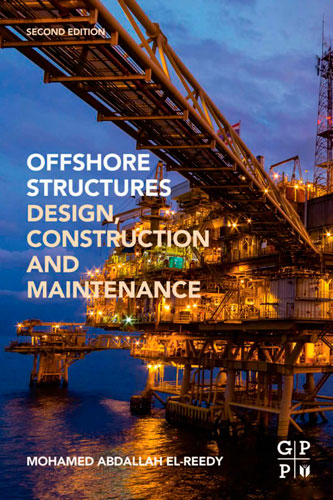
Offshore Structures Design, Construction and Maintenance Проектирование, строительство и обслуживание морских сооружений



Артикул: 00-01115126
в желания В наличии
Автор: Mohamed A. El-Reedy
Издательство: Gulf Professional Publishing (все книги издательства)
Место издания: Oxford
ISBN: 978-0-12-816191-3
Год: 2020
Формат: А4 (210х297 мм)
Переплет: Мягкая обложка
Страниц: 682
Вес: 1700 г
Издание на английском языке
The book is a comprehensive guide to the design, construction, operation, and repair of offshore structures and pipelines. It covers standards (such as API RP2A), geotechnical engineering, structures and welding, corrosion protection, fatigue analysis, installation and safety, as well as methods for assessing and repairing platforms and subsea pipes. It is a useful reference for engineers and marine construction specialists.
Content
About the author
Preface
1. Introduction to offshore structures
1.1. Introduction
1.2. History of offshore structures
1.3. Overview of field development
1.3.1. Field development cost
1.3.2. Multicriteria concept selection
1.4. Front end engineering design requirements
1.5. Types of offshore platforms
1.5.1. Drilling/well-protected platform
1.5.2. Tender platforms
1.5.3. Self-contained platforms
1.5.4. Production platform
1.5.5. Quarters platform
1.5.6. Flare jacket and flare tower
1.5.7. Auxiliary platform
1.5.8. Bridges
1.5.9. Heliport
1.6. Different types of offshore structures
1.6.1. Concrete gravity platform
1.6.2. Floating production, storage, and offloading
1.6.3. Tension-leg platform
Reference
Further reading
2. Offshore structure loads and strength
2.1. Introduction
2.2. Gravity load
2.2.1. Dead load
2.2.2. Live load
2.2.3. Impact load
2.2.4. Design for serviceability limit state
2.2.5. Helicopter landing loads
2.2.6. Crane support structure
2.3. Wind load
2.4. Example for stair design
2.4.1. Gravity loads
2.4.2. Wind loads
2.5. Offshore loads
2.5.1. Wave load
2.5.2. Current force
2.5.3. Earthquake load
2.5.4. Ice loads
2.5.5. Other loads
2.6. Design for ultimate limit state
2.6.1. Load factors
2.6.2. Extreme environmental situation for fixed offshore platforms
2.6.3. Operating environmental situations-fixed platforms
2.6.4. Partial action factors
2.7. Collision events
2.7.1. Accidental impact energy
2.7.2. Dropped objects
2.8. Fires and explosions
2.9. Material strength
2.9.1. Steel groups
2.9.2. Steel classes
References
Further reading
3. Offshore structure platform design
3.1. Introduction
3.2. Preliminary dimensions
3.2.1. Approximate dimensions
3.3. Bracing system
3.4. Jacket design
3.5. Structure analysis
3.5.1. Global structure analysis
3.5.2. The loads on piles
3.5.3. Modeling techniques
3.5.4. Dynamic structure analysis
3.5.5. In-place analysis according to ISO 19902
3.6. Cylinder member strength
3.6.1. Cylinder member strength calculation according to ISO 19902
3.6.2. Cylinder member strength calculation
3.7. Tubular joint design
3.7.1. Simple joint calculation API RP2A (2007)
3.7.2. Joint calculation according to API RP2A (2000)
3.7.3. Fatigue analysis
3.8. Topside design
3.8.1. Grating design
3.8.2. Handrails, walkways, stairways, and ladders
3.9. Boat landing design
3.9.1. Boat landing calculation
3.9.2. Riser guard design
3.9.3. Boat landing design using the nonlinear analysis method
3.9.4. Boat impact methods
3.9.5. Tubular member denting analysis
3.10. Riser guard
3.11. On-bottom stability
3.12. Bridges
3.13. Crane loads
3.14. Lift installation loads
3.15. Vortex-induced vibrations
3.16. Helideck design
3.17. Structure analysis and design quality control
References
Further reading
4. Geotechnical data and pile design
4.1. Introduction
4.2. Investigation procedure
4.2.1. Performing an offshore investigation
4.2.2. Drilling equipment and method
4.2.3. Wire-line sampling technique
4.2.4. Offshore soil investigation problems
4.3. Soil tests
4.4. In situ testing
4.4.1. Cone penetration test
4.4.2. Field vane test
4.5. Soil properties
4.5.1. Strength
4.5.2. Soil characteristics
4.6. Pile foundations
4.6.1. Pile capacity for axial loads
4.6.2. Foundation size
4.6.3. Axial pile performance
4.6.4. Pile capacity calculation methods
4.6.5. Pile capacity under cyclic loadings
4.7. Scour
4.8. Pile wall thickness
4.8.1. Pile stresses
4.8.2. Stresses due to the hammer effect
4.8.3. Minimum wall thickness
4.8.4. Driving shoe and head
4.8.5. Pile section lengths
4.9. Pile drivability analysis
4.9.1. Evaluation of soil resistance drive
4.9.2. Unit shaft resistance and unit end bearing for uncemented materials
4.9.3. Upper- and lower-bound soil resistance drive
4.9.4. Results of wave equation analyses
4.9.5. Results of drivability calculations
4.9.6. Recommendations for pile installation
4.10. Soil investigation report
4.11. Conductor support platform
References
Further reading
5. Fabrication and installation
5.1. Introduction
5.2. Construction procedure
5.3. Engineering of execution
5.4. Fabrication
5.4.1. Joint fabrication
5.4.2. Fabrication based on international standards organization
5.5. Jacket assembly and erection
5.6. Weight control
5.6.1. Weight calculation
5.7. Loads from transportation, launch, and lifting operations
5.8. Lifting procedure and calculation
5.8.1. Lifting calculation
5.8.2. Structural calculation for lifting
5.8.3. Lift point design
5.8.4. Clearances
5.8.5. Lifting calculation report
5.8.6. Bumpers and guides
5.9. Loadout process
5.10. Transportation process
5.10.1. Supply boats
5.10.2. Anchor-handling boats
5.10.3. Towboats
5.10.4. Towing
5.10.5. Drilling vessels
5.10.6. Crew boats
5.10.7. Barges
5.10.8. Crane barges
5.10.9. Offshore derrick barges (fully revolving)
5.10.10. Jack-up construction barges
5.11. Transportation loads
5.12. Launching and upending forces
5.13. Installation and pile handling
References
Further reading
6. Corrosion protection
6.1. Introduction
6.1.1. Corrosion in seawater
6.1.2. Steel corrosion in seawater
6.1.3. Choice of system type
6.1.4. Geometric shape
6.2. Coatings and corrosion protection of steel structures
6.3. Corrosion stresses due to the atmosphere, water, and soil
6.3.1. Classification of environments
6.3.2. Mechanical, temperature, and combined stresses
6.4. General cathodic protection design considerations
6.4.1. Environmental parameters affecting cathodic protection
6.4.2. Design criteria
6.4.3. Protective potentials
6.4.4. Detrimental effects of cathodic protection
6.4.5. Galvanic anode materials
6.4.6. Cathodic protection design parameters
6.4.7. Cathodic protection calculation and design procedures
6.5. Design example
6.6. General design considerations
6.7. Anode manufacture
6.8. Installation of anodes
6.9. Anode dimension tolerance
6.9.1. Internal and external inspection
Reference
Further reading
7. Assessment of existing structures and repairs
7.1. Introduction
7.2. American Petroleum Institute RP2A historical background
7.2.1. Environmental loading provisions
7.2.2. Regional environmental design parameters
7.2.3. Member resistance calculation
7.2.4. Joint strength calculation
7.2.5. Fatigue
7.2.6. Foundation design
7.3. Historical review of Department of Energy/Health and Safety Executive guidance notes
7.3.1. Environmental loading provisions
7.3.2. Joint strength equations
7.3.3. Fatigue
7.3.4. Foundations
7.3.5. Definition of design condition
7.3.6. Currents
7.3.7. Wind
7.3.8. Waves
7.3.9. Deck air gap
7.3.10. Historical review of major North Sea incidents
7.4. Historical assessment of UK environmental loading design practice
7.4.1. Design environmental parameters
7.4.2. Fluid loading analysis
7.5. Development of American Petroleum Institute RP2A member resistance equations
7.6. Allowable stresses for cylindrical members
7.6.1. Axial tension
7.6.2. Axial compression
7.6.3. Bending
7.6.4. Shear
7.6.5. Hydrostatic pressure
7.6.6. Combined axial tension and bending
7.6.7. Combined axial compression and bending
7.6.8. Combined axial tension and hydrostatic pressure
7.6.9. Combined axial compression and hydrostatic pressure
7.6.10. American institute of steel construction historical background
7.6.11. Pile design historical background
7.6.12. Effects of changes in tubular member design
7.7. Failure due to fire
7.7.1. Degree of utilization
7.7.2. Tension member design by EC3
7.7.3. Unrestrained beams
7.7.4. Example: strength design for steel beam
7.7.5. Steel column: strength design
7.7.6. Case study for a deck under fire
7.8. Platform failure case study
7.9. Failure mechanism
7.9.1. Strength reduction
7.9.2. Environmental load effect
7.9.3. Structure assessment
7.10. Assessment of platform
7.10.1. Nonlinear structure analysis in ultimate strength design
7.10.2. Structural modeling
7.10.3. Determine the probability of structural failure
7.10.4. Establish acceptance criteria
7.10.5. Reliability analysis
7.10.6. Software requirement
7.11. Offshore platform decommissioning
7.11.1. Decommissioning methods
7.11.2. Cutting tools
7.11.3. Case study for platform decommissioning
7.12. Scour problem
7.13. Offshore platform repair
7.13.1. Deck repair
7.13.2. Reduce the loads
7.13.3. Jacket repair
7.13.4. Dry welding
7.13.5. Platform "shear pups" repair
7.13.6. Underwater repair for a platform structure
7.13.7. Case study 2: platform underwater repair
7.13.8. Clamps
7.13.9. Grouting
7.13.10. Example of using fiber reinforced polymer
7.13.11. Case study for conductor composite repair
7.13.12. Fiberglass access decks
7.13.13. Fiberglass mudmats
7.13.14. Case study 1: flare repair
7.13.15. Case study 2: repair of the flare jacket
7.13.16. Case study 3: repair of the bearing support
References
Further reading
8. Risk-based inspection technique
8.1. Introduction
8.2. Structure integrity management methodology
8.3. Quantitative risk assessment for fleet structures
8.3.1. Likelihood (probability) factors
8.3.2. Overall risk ranking
8.4. Underwater inspection plan
8.4.1. Underwater inspection (according to API SIM 2005)
8.4.2. Baseline underwater inspection
8.4.3. Routine underwater inspection scope of work
8.4.4. Inspection plan based on ISO 9000
8.4.5. Inspection and repair strategy
8.4.6. Flooded member inspection
8.5. Anode retrofit maintenance program
8.6. Assessment process
8.6.1. Collecting data
8.6.2. Structure assessment
8.7. Mitigation and risk reduction
8.7.1. Consequence mitigation
8.7.2. Reduction probability of platform failure
8.8. Occurrence of member failures with time
References
Further reading
9. Subsea pipeline design and installation
9.1. Introduction
9.2. Pipeline project stages
9.2.1. Pipeline design management
9.3. Pipeline design codes
9.3.1. Pipeline route design guidelines
9.4. Design deliverables
9.4.1. Pipeline design
9.4.2. Near-shore pipeline
9.4.3. Methods of stabilization
9.4.4. Combined current and wave in pipeline
9.4.5. Impact load
9.4.6. Pipeline free span
9.5. Concrete coating
9.5.1. Inspection and testing
9.6. Installation
9.6.1. S-lay
9.6.2. J-lay
9.6.3. Reel-lay
9.6.4. Piggyback installation
9.7. Installation management
References
Further reading
Index
Отзывы покупателей (0)
У этого товара пока нет отзывов. Поделитесь впечатлением первым.