

Каталог▲▼
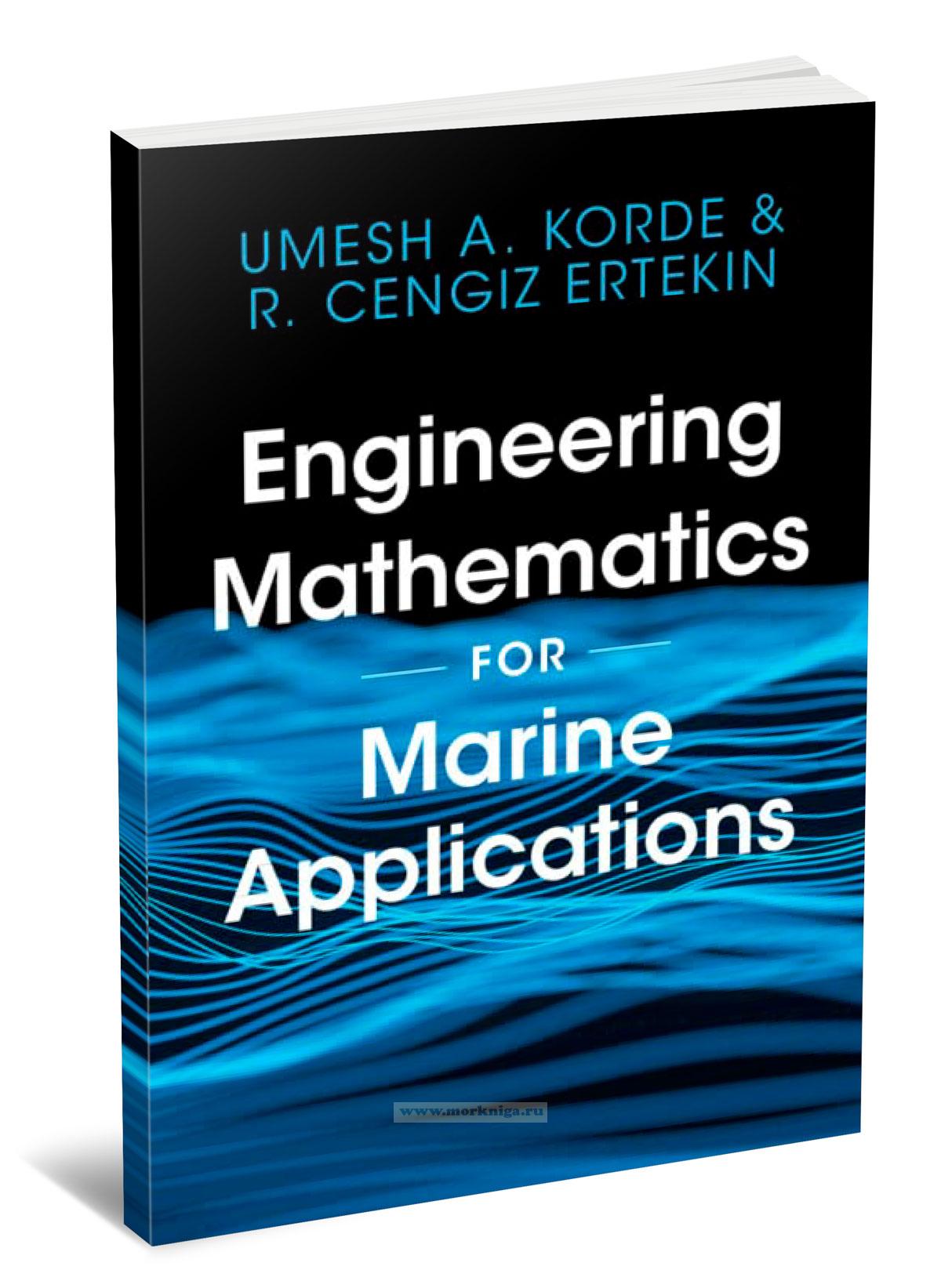
Engineering Mathematics for Marine Applications/Инженерная математика для морских приложений
Артикул: 00-01112948
в желания В наличии
Автор: Umesh A. Korde & R. Cengiz Ertekin
Издательство: Cambridge University Press (все книги издательства)
Место издания: Cambridge
ISBN: 9781108421041
Год: 2023
Формат: А4 (210х297 мм)
Переплет: Мягкая обложка
Страниц: 428
Вес: 1069 г
Engineering Mathematics for Marine Applications is a comprehensive guide that integrates the mathematical methods and dynamic analysis required to study and design floating marine systems.
Fundamental topics such as vector calculus,
Fourier transforms, differential equations, and their application to marine applications are covered in detail. Particular attention is given to the analysis of marine system scales, currents around structures, surface waves, and the behavior of floating bodies in wave conditions. The book provides real-world examples and problems to reinforce the material, making it a valuable resource for both students and practicing engineers seeking to develop their skills in solving complex marine engineering problems using mathematical methods.
Contents
Preface
Part I. The Foundations
1. Vector Calculus-I
1.1. Basic Properties of Vectors
1.2. Inner Product.
1.3. General Observations on Cross, Inner Products, and Their Combinations
1.4. Differential Calculus of Vectors
1.5. Indicial Notation
1.6. Concluding Remarks
1.7. Self-Assessment
2. Vector Calculus-II
2.1. Line Integrals
2.2. Surface Integrals
2.3. Gauss's Divergence Theorem
2.4. Stokes's Theorem
2.5. Helmholtz Theorem
2.6. Cartesian Tensors
2.7. Concluding Remarks
2.8. Self-Assessment
3. Complex Variables
3.1. Complex Variables
3.2. Functions of Complex Variables
3.3. An Example of Cauchy-Riemann Conditions
3.4. Complex Integration Overview
3.5. Contour Integration
3.6. Principal Value Integrals
3.7. Complex Velocity Potentials
3.8. Conformal Mapping
3.9. Concluding Remarks
3.10. Self-Assessment
4. Fourier Analysis
4.1. Requirements for Fourier Analysis
4.2. More about Functions
4.3. Fourier Trigonometric Series
4.4. Fourier Exponential Series
4.5. Fourier Transforms
4.6. The Delta Function
4.7. Fourier Transforms of Derivatives and Integrals
4.8. Concluding Remarks
4.9. Self-Assessment
Part II. Understanding Dynamic Systems
5. Ordinary Differential Equations-I
5.1. Simple Examples: First-Order Systems
5.2. Simple Examples: Second-Order Systems
5.3. Convolution Integral and Response to Arbitrary Excitation
5.4. Multi-Variable Systems
5.5. Fourier Convolution
5.6. Concluding Remarks
5.7. Self-Assessment
6. Ordinary Differential Equations-II
6.1. Cauchy-Euler Equations
6.2. Bessel Equation
6.3. Modified Bessel Equation
6.4. Bessel Function Relations
6.5. Partial Wave Expansions
6.6. Bessel-Reducible Equations
6.7. Legendre Functions
6.8. Concluding Remarks
6.9. Self-Assessment
7. Partial Differential Equations-I
7.1. Commonly Encountered Types of Partial Differential Equations
7.2. Parabolic Equations
7.3. Elliptic Equations
7.4. Hyperbolic Equations
7.5. Solution Techniques
7.6. Green's Functions for Finite Domains
7.7. Concluding Remarks
7.8. Self-Assessment
8. Partial Differential Equations-II
8.1. Diffusion Equation in an Infinite Domain
8.2. Laplace Equation on a Semi-Infinite Slab
8.3. Wave Equation on an Infinite Domain (One-Dimensional)
8.4. Infinite Domains and the Method of Stationary Phase
8.5. Concluding Remarks
8.6. Self-Assessment
Part III. Mathematics of Scaling
9. Dimensional Analysis
9.1. Introduction
9.2. Similarity and Types of Forces
9.3. Dimensional Homogeneity
9.4. The Algebra of Dimensions
9.5. Dimensional Independence
9.6. Buckingham's Pi Theorem
9.7. Dimensionless Equations
9.8. Scaling of Loads
9.9. Elastic Structures
9.10. Some Examples of Dimensional Analysis
9.11. Concluding Remarks
9.12. Self-Assessment
Part IV. Marine Applications
10. Viscous-Fluid Flow
10.1. Introduction
10.2. Viscosity and the Stress Tensor
10.3. Continuity and the Navier-Stokes Equations
10.4. Boundary Conditions
10.5. Some Exact Solutions
10.6. Low-Reynolds-Number Flows
10.7. Boundary Layer and Separation
10.8. Laminar Boundary Layer
10.9. Turbulent Boundary Layer
10.10. Concluding Remarks
10.11. Self-Assessment
11. Ideal-Fluid Flow
11.1 Introduction
11.2. Governing Equations and Boundary Conditions
11.3. Elementary Singularities
11.4. Distribution of Singularities and the Green Function Method
11.5. Concluding Remarks
11.6. Self-Assessment
12. Water Waves
12.1. Introduction 284
12.2. Fundamental Relations
12.3. Perturbation Expansion
12.4. Long-Crested, Linear Progressive Waves
12.5. Concluding Remarks
12.6. Self-Assessment
13. Wave Diffraction and Wave Loads
13.1. Introduction
13.2. Formulation of the Mathematical Problem
13.3. A Diffraction Example: Vertical Circular Cylinder
13.4. Green Function Method Revisited: The Island Problem
13.5. Wave Forces on Slender Cylinders: Morison's Equation
13.6. Concluding Remarks
13.7. Self-Assessment
14. Prescribed Body Motions and Floating Bodies
14.1. Introduction
14.2. Unbounded Fluid and Added Mass Coefficients
14.3. Added Mass and Damping Coefficients in the Presence of a Free Surface
14.4. Haskind-Hanaoka Relationship
14.5. Freely Floating Bodies
14.6. Concluding Remarks
14.7. Self-Assessment
15. Irregular-Sea Analysis
15.1. Introduction
15.2. Fourier Analysis
15.3. Spectral Density
15.4. Probability
15.5. Transfer function and Spectral Parameters
15.6. Short-Term Extreme Values
15.7. Encounter Frequency and Spectrum Conversion
15.8. Directional Wave Spectrum
15.9. Some Wave-Spectra Formulas
15.10. Concluding Remarks
15.11. Self-Assessment
Part V. Variational Methods
16. Introduction to Analytical Dynamics
16.1. Shape of a Hanging Chain or a Cable
16.2. Dynamics of a Beam
16.3. Lagrange's Equations
16.4. Concluding Remarks
16.5. Self-Assessment
References
Author Index
Index
Отзывы покупателей (0)
У этого товара пока нет отзывов. Поделитесь впечатлением первым.