

Каталог▲▼
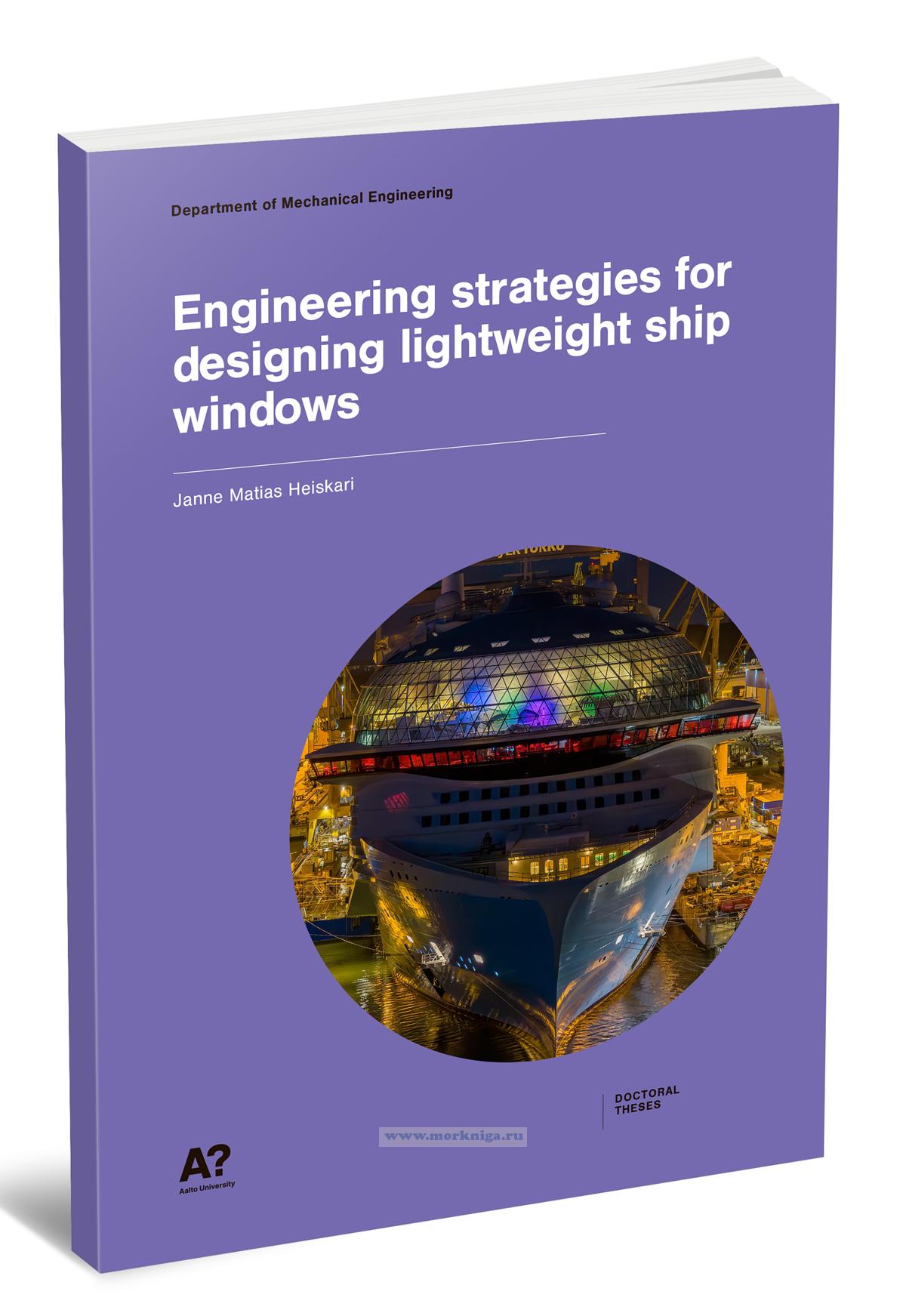
Engineering strategies for designing lightweight ship windows/Инженерные стратегии для проектирования легких судовых иллюминаторов



Артикул: 00-01106232
в желания В наличии
Автор: Janne Matias Heiskari
Издательство: Aalto University (все книги издательства)
ISBN: 978-952-64-2068-4
Год: 2024
Переплет: Мягкая обложка
Страниц: 90
Вес: 217 г
Издание на английском языке
The book is dedicated to the development of efficient and lightweight windows for ships. It examines modern engineering approaches and materials that help reduce the weight of window structures while improving their strength and functionality. The author analyzes the use of innovative materials such as composite and polycarbonate solutions, as well as the optimization of structures to increase efficiency and safety. The book highlights the importance of research in this area to create a more comfortable and safe environment for passengers on ships.
Contents
Preface
Contents
List of Publications
Author’s Contribution
Original Features
Abbreviations
Symbols
1. Introduction
1.1 Background
1.2 Ship windows
1.3 Window bending behavior
1.3.1 Geometric nonlinearity
1.3.2 Shear transfer
1.3.3 Load sharing
1.4 Standard window design
1.5 Research gap and objectives
1.6 Limitations
2. Methods
2.1 Mechanical modeling
2.2 Finite element method
2.2.1 Shell elements
2.2.2 Solid-shell elements
2.2.3 Hydrostatic fluid element
2.2.4 Boundary conditions and loads
2.2.5 Analysis type
2.2.6 Meshed models
2.2.7 Post-processing
2.3 Particle swarm optimization
2.3.1 Optimization problem
3. Optimization of monolithic IGUs
3.1 Validation [I, IV]
3.2 Effect of geometric nonlinearity and load sharing [I]
3.3 Effect of rectangular aspect ratio [I, II]
3.4 Effect of deflection limit [II]
3.5 Effect of thickness ratio [III]
3.6 Effect of window shape [III]
3.7 Comparison to classification rules [III]
4. Optimization of laminated IGUs [IV]
4.1 Combined effects
4.2 Effect of temperature change
4.3 Laminate glass effectivity
4.4 Comparison to classification rules
5. Conclusions and future work
References
Publications
Отзывы покупателей (0)
У этого товара пока нет отзывов. Поделитесь впечатлением первым.