

Каталог▲▼
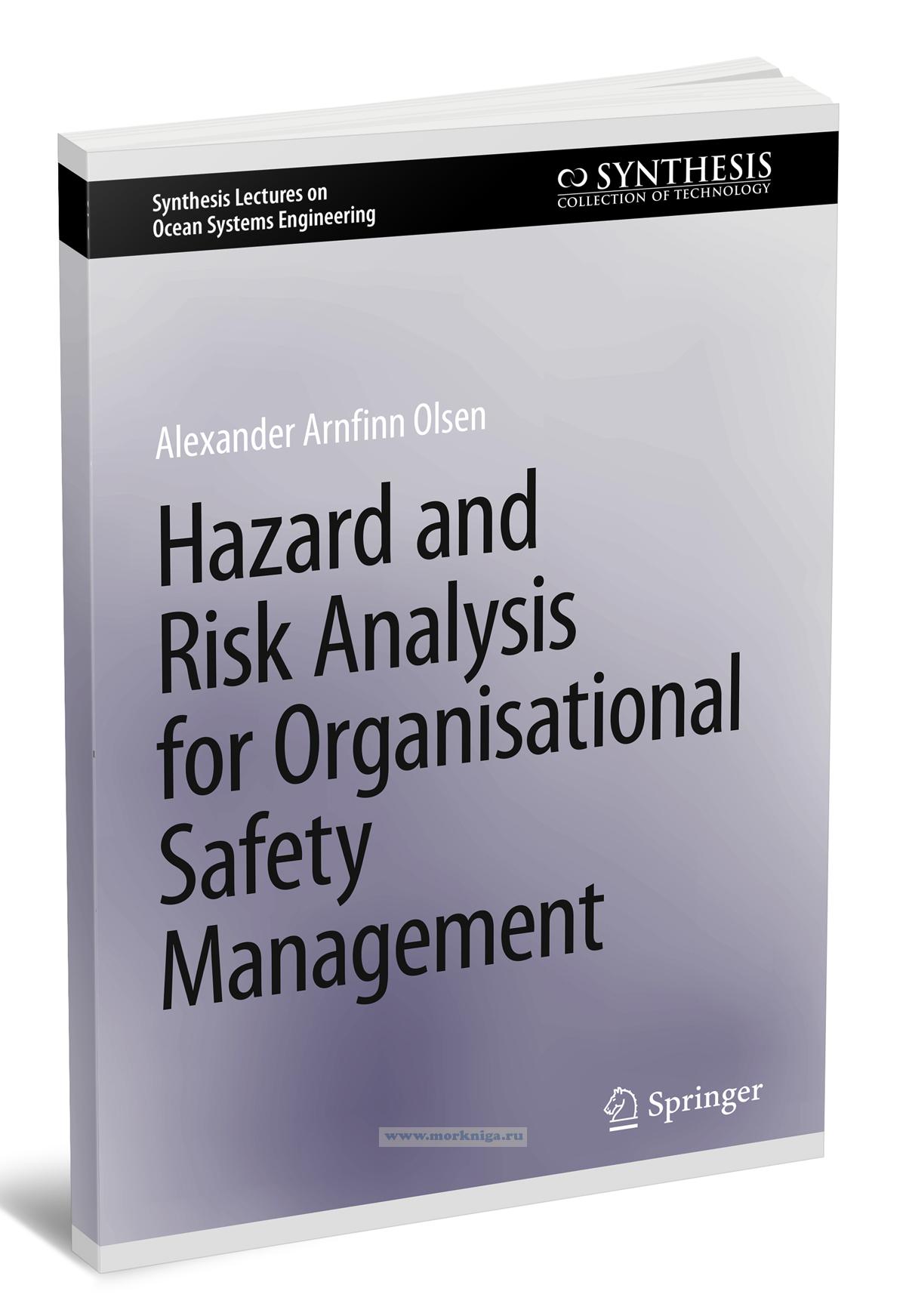
Hazard and Risk Analysis for Organisational Safety Management/Анализ опасностей и рисков для управления безопасностью организации
Артикул: 00-01106176
в желания В наличии
Автор: Olsen A.A.
Издательство: Springer (все книги издательства)
Место издания: Switzerland
ISBN: 978-3-031-73457-1
Год: 2025
Переплет: Мягкая обложка
Страниц: 110
Вес: 288 г
Издание на английском языке
The book focuses on safety management in organizations operating in dangerous environments, such as the global maritime industry, where two ships are lost every day and millions of dollars in insurance refunds are paid. The focus is on human behavior as the source of most workplace accidents and the reasons why losses are not significantly higher. The publication is intended for non-practicing professionals and covers the legal, moral, operational, and commercial requirements for creating secure work systems through formal security management systems. At the end of the book, readers can explain the main topics and principles of security management and apply them to their work environment.
Contents
1 Core Concepts and Themes
1.1 Incidents and Accidents
1.2 Hazards
1.3 System Level Hazards
1.4 Risk and Risk Management
1.5 Safety and Risk
1.6 Cause and Consequence
1.7 Controls and Mitigations
1.8 Swiss Cheese Model
2 Importance of Risk in Organisational Safety Management
2.1 Perceptions of Risk.
3 Safety Planning
3.1 Preliminary Hazard Analysis
3.2 Verification and Validation
3.3 Safety Planning
3.4 Allocation of Resources
3.5 Safety Plan
4 Preliminary Hazard Identification and Analysis
4.1 Preliminary Hazard Identification
4.2 Preliminary Hazard and Accident Analysis
4.3 Hazard and Operability Studies (HAZOP)
4.4 Guide Words
5 Functional Safety
5.1 Types of Safety Function
5.2 Control Functions
5.3 Protection Functions
5.4 Safety Integrity Levels (SIL)
5.5 SIL Probabilities
5.6 Risk Reduction Process
5.7 First Principles (Quantitative) Approach
5.8 Other (Qualitative Approaches)
5.9 Applying the SIL
5.10 Targets for Hardware Failure Probability
5.11 Relationship Between Safety Integrity Levels, Techniques and Measures
6 Understanding Risk Analysis
6.1 ALARP (As Low As Reasonably Practicable)
6.2 GAMAB (Globalement au Moins Aussi Bon)
6.3 MEM (Minimale Endogene Mortalitat)
6.4 Conceptualising Risk
6.5 Risk Estimation
6.6 Frequency and Sequencing
6.7 Safety Targets
6.8 Risk Classification
6.9 Categories of Severity
6.10 Case Study: Ford Pinto (1972)
7 Applying Risk Analysis
7.1 Systems Hazard Analysis (SHA)
7.2 Functional Systems Hazard Analysis (FSHA)
7.3 Fault Tree Analysis (FTA)
7.4 FTA Software
7.5 Event Tree Analysis (ETA)
7.6 Advantages and Limitations of ETA
7.6.1 FMEA
7.7 FMEA Worksheet
7.8 Probability (P)
7.9 Severity (S)
7.10 Dormancy or Latency Period
7.11 Indication
7.12 Risk level (P x S) and (D)
7.13 Bow Tie Analysis
8 Risk Management and Hazard Reporting
8.1 Typical Hazard Lifecycle
8.2 Why Risk Management?
8.2.1 Case Study: The Nimrod XV230 Incident
8.3 Hazard Log
8.3.1 Part 1: Introduction
8.3.2 Part 2: Accident Data
8.3.3 Part 3: Hazard Data
8.3.4 Part 4: Statement of Risk Classification
8.3.5 Part 5: Journal
8.4 Closure and Removal of Entries
8.5 Record Keeping and Project Documentation
8.6 Procedure Completion
8.7 Hazard Log Inputs and Outputs
8.8 Hazard Log Software
8.9 Limitations of the Hazard Log
8.10 DRACAS
8.11 Hazard and Risk Analysis
9 Safety Arguments and Safety Cases
9.1 Robens Report
9.2 Flixborough Disaster, 1 June 1974
9.3 Health and Safety at Work Etc. Act 1974
9.4 Corporate Manslaughter and Corporate Homicide Act 2007
9.5 Permissioning Regimes
9.6 Models for the Construction of a Safety Argument
9.7 Constructing the Safety Argument
9.8 Drafting the Safety Case Report
9.9 Structuring the Safety Case Report
Bibliography
Отзывы покупателей (0)
У этого товара пока нет отзывов. Поделитесь впечатлением первым.