

Каталог▲▼
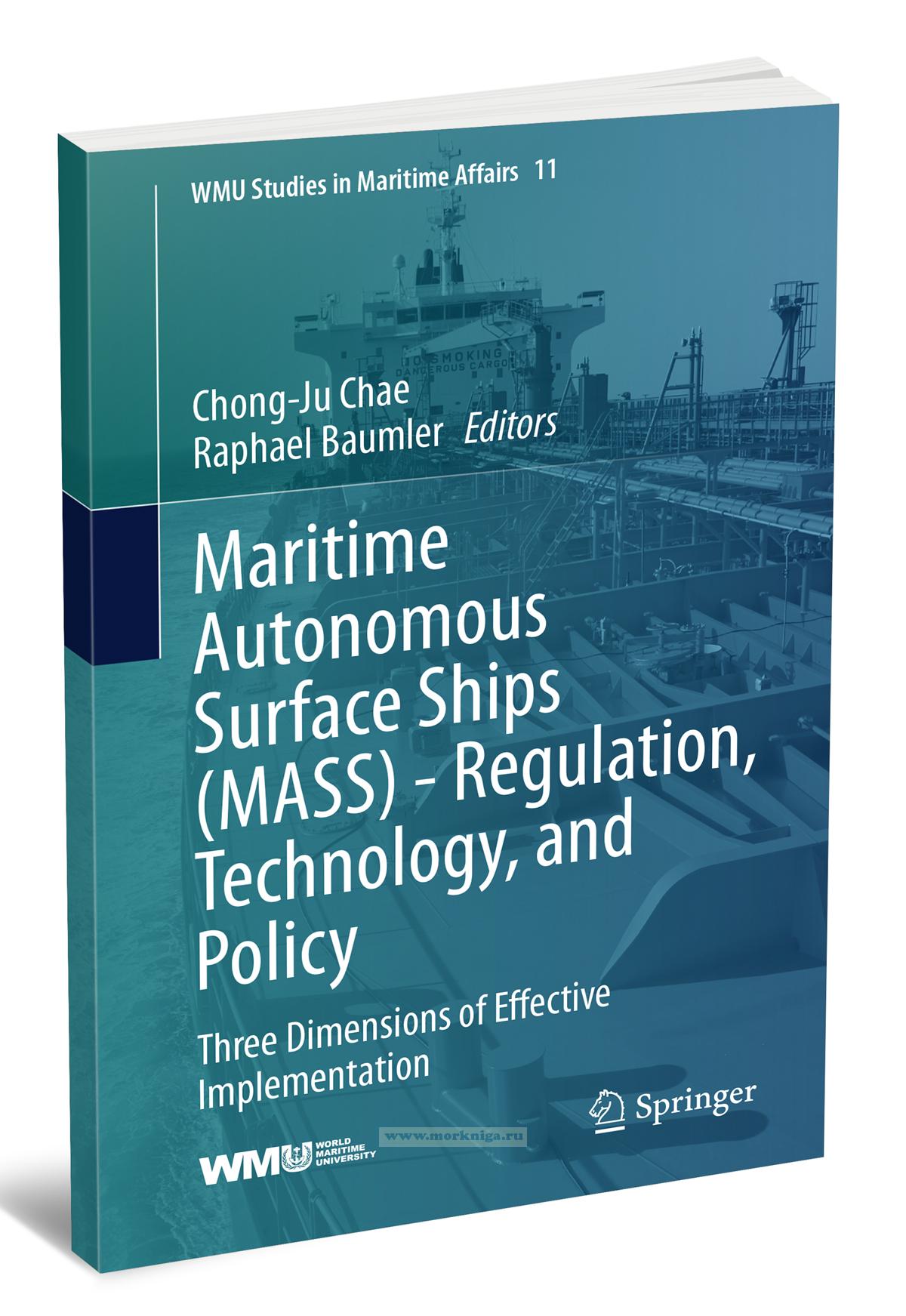
Maritime Autonomous Surface Ships (MASS) - Regulation, Technology, and Policy/Морские автономные надводные корабли (MASS) - Регулирование, технологии и политика
в избранное В наличии
Артикул: 00-01105971
Автор: Chong-Ju Chae, Raphael Baumler
Издательство: Springer (все книги издательства)
Место издания: Switzerland
ISBN: 9 78-3-031-69436-3
Год: 2024
Переплет: Мягкая обложка
Страниц: 318
Вес: 794 г
Издание на английском языке
The book is devoted to the study of autonomous marine vessels (MASS) and their unique aspects, which differ from traditional vessels. It examines three key elements: international regulations, technological developments, and policies related to MASS. The book shares knowledge about the rules established by the International Maritime Organization (IMO) and the United Nations Convention on the Law of the Sea (UNCLOS), focusing on safety. Technologies such as artificial intelligence and cybersecurity are also discussed, and the need for a systematic approach is emphasized. In conclusion, the issues of liability for damage related to the operation of MASS and their role in the debate on the decarbonization of the marine sector are considered. The authors hope that the book will be a useful resource for researchers and experts working in this important field.
Contents
Introduction
Chong-Ju Chae
Part I MASS Regulation and Safety
MASS and IMO Works
Chong-Ju Chae
Unmanned Ships and Flag State Jurisdiction
Young-Hun Min and Jung-Hwan Choi
MASS, COLREG, and Technologies
Zakirul Bhuiyan
MASS and Safety
Osiris A. Valdez Banda
Risk Assessment for MASS
Hyung-Ju Kim
Part II MASS and Technology
Autonomous Navigation System
Do Hyeong Lim and Hyogyeong Joo
MASS and Artificial Intelligence
Seojeong Lee
MASS Cybersecurity
Kimberly Tam
Thinking MASS in System
Raphael Baumler
Part III MASS and Policy
MASS and Liability for Damages
Henning Jessen
MASS and Decarbonisation Policy: Exploring the Nexus Between Maritime Autonomous Surface Ships and Decarbonisation Efforts
Aykut I. Olcer and Anas S. Alamoush
MASS and Humans Interlinked: Errors, Skills, Training, and Job Market
Krzysztof Wrobel and Mateusz Gil
Revisiting Maritime Education and Training in the Era of MASS
Chang-Hee Lee and Young-Joong Ahn
Bridge Simulator as a Training Platform for Future Remotely
Controlled MASS Navigators
Zakirul Bhuiyan
Отзывы покупателей (0)
У этого товара пока нет отзывов. Поделитесь впечатлением первым.